
What Is Nanoplastia? The Complete Guide for Hair Professionals
Nanoplastia explained for salon professionals: how it works in the cortex and cuticle, who it suits, results to expect and how to deliver them correctly.
Vitta Gold Academy · August 4, 2026 · 11 min read
Key takeaways
- Nanoplastia is a low-molecular-weight realignment treatment that works with the hair's own amino-acid structure instead of forcing it with harsh chemistry.
- It is formaldehyde-free when performed with a compliant professional line such as Nanoplex Arginina™.
- It reaches a fully adjustable finish — 100% straight, natural anti-frizz, or defined curls — on any hair type, because it acts on both the cortex and the cuticle.
- Results depend far more on diagnosis, sectioning and thermal activation than on the product alone.
- It is the highest-ticket, most rebookable service most salons can add to their menu today.
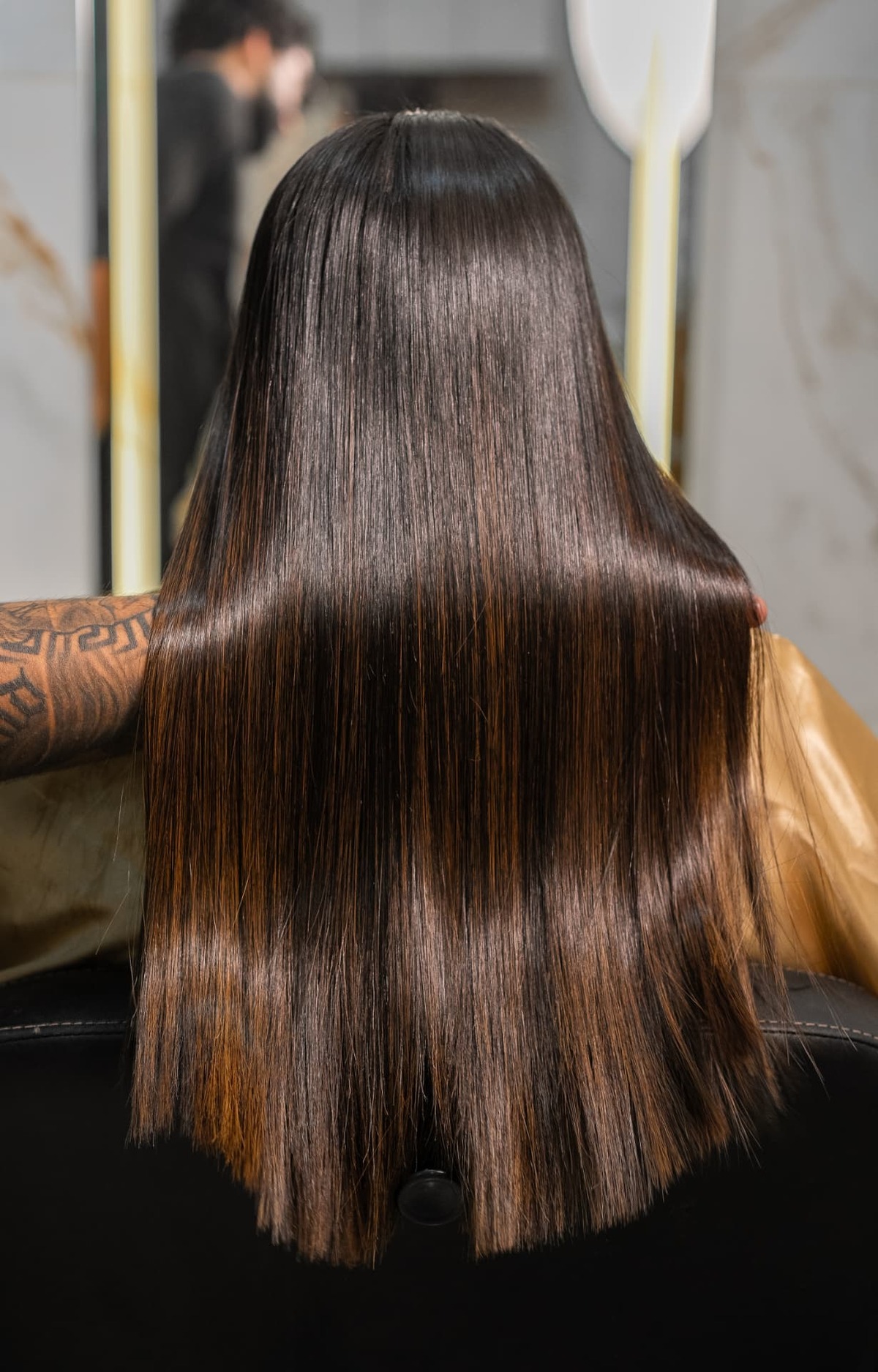
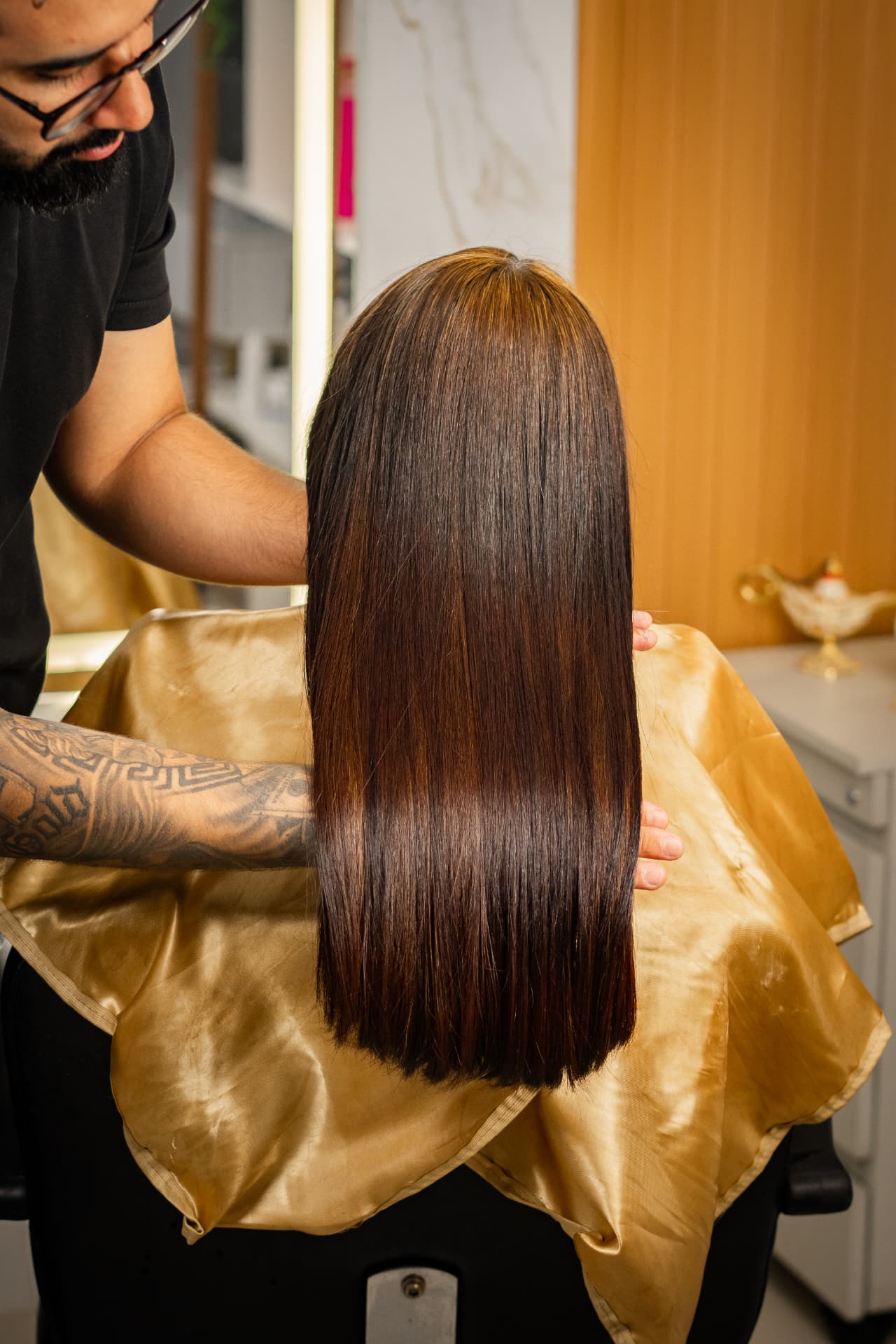
What is Nanoplastia? Nanoplastia is a professional hair realignment treatment that uses low-molecular-weight actives, such as amino acids and hydrolysed proteins, acting in both the cortex and the cuticle, sealed with controlled heat. It reaches a 100% straight, mirror-smooth finish on any hair type, or an adjustable natural anti-frizz or curl-defined result, and lasts three to six months.
Nanoplastia is a professional hair realignment treatment that reduces volume and frizz and restores shine by delivering low-molecular-weight active ingredients — amino acids, proteins and conditioning agents — deep into the cortex and the cuticle at once, then sealing that new alignment with controlled heat. Unlike the smoothing systems that dominated salons a decade ago, it is designed to work with the hair's natural structure rather than break it down and rebuild it, and the result is never limited to softening frizz: with full processing it reaches a complete 100% straight finish on any hair type, including coarse and highly resistant textures.
For a salon professional, the practical definition is simpler: Nanoplastia is the service that lets you deliver exactly the finish the client asked for — a 100% straight, mirror-smooth result, a natural anti-frizz finish with movement, or defined, elongated curls — on hair types that older treatments used to compromise, and to charge accordingly. The finish is a decision made at consultation, not a ceiling set by the chemistry.
How does Nanoplastia work inside the hair fiber?
Nanoplastia works in two layers at once. Low-molecular-weight actives enter the cortex and reorganise the cuticle, the fiber is realigned while those actives are still mobile, and controlled flat-iron heat fixes the new alignment. Because it acts on both the inner cortex and the outer cuticle rather than one or the other, the result holds for three to six months depending on hair type, technique and home care.
Human hair is roughly 90% keratin, a protein built from amino acid chains held together by hydrogen, ionic and disulfide bonds. Frizz and unwanted volume are, in structural terms, a disorganized cuticle and a cortex whose bonds are holding the fiber in an irregular shape.
- 1Cleansing and opening: a pre-treatment wash removes residue and lifts the cuticle so actives can penetrate rather than sit on the surface. A gentle cuticle-opening shampoo is usually enough — a harsh clarifier is a diagnostic decision, not a default.
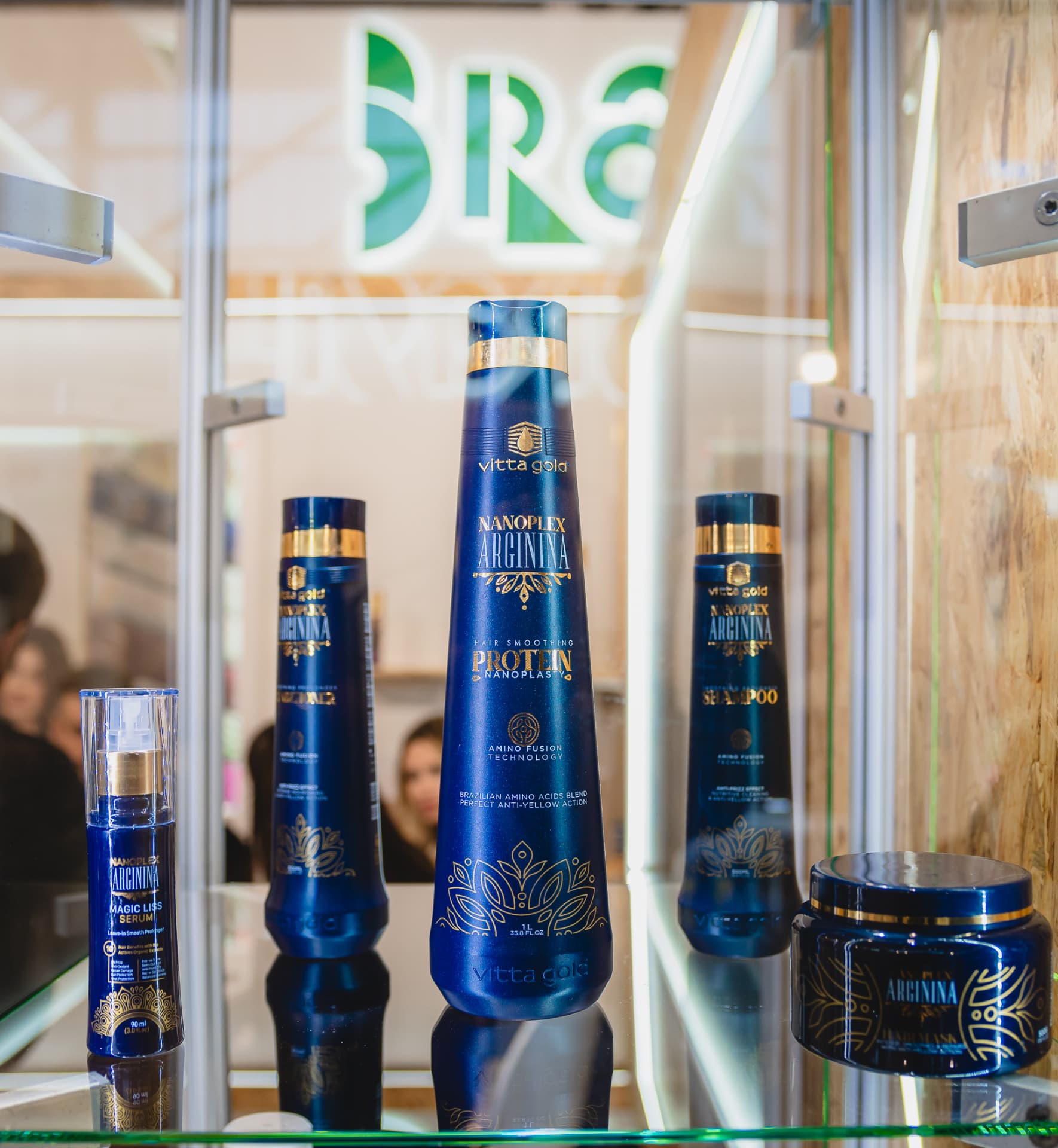
- 2Penetration: the active complex — in the Vitta Gold system, arginine-based Nanoplex Arginina™ — enters the cortex and reorganises the cuticle thanks to its low molecular weight.
- 3Realignment: the fiber is combed and organized while the actives are still mobile inside the strand.
- 4Thermal activation: controlled flat-iron heat evaporates residual water and fixes the new alignment, sealing the cuticle.
- 5Finishing: the fiber is cooled and stabilized so the result holds through the first washes.
How long does the Nanoplastia process actually take?
A full Nanoplastia service, including diagnosis, application, processing and thermal sealing, takes two to four hours in the chair depending on hair length and density. Within that appointment, the chemical processing step itself needs 40 to 60 minutes once the product is fully distributed — never 20, regardless of how the hair looks on the surface. The reaction that reorganises the cortex is chemical, not visual, and cutting it short is one of the most common reasons a result fades in weeks instead of months.
Is Nanoplastia formaldehyde-free?
Yes, when performed with a compliant professional line. A modern Nanoplastia achieves realignment with amino acids, hydrolysed proteins and controlled heat, with no formaldehyde donor required. Verify it with the safety data sheet and the full ingredient list for your market before you buy, not with packaging copy.
A properly formulated Nanoplastia line is formaldehyde-free, and that is exactly why the category grew in the United States, Canada and the United Kingdom while older smoothing treatments were restricted. What matters commercially is not the word on the label but the documentation behind it: always work with a professional line that publishes its compliance information for your market. We cover this in detail in the safety guide linked below.
Who is Nanoplastia for?
Nanoplastia suits virtually every hair type, including coarse, afro and highly resistant hair that other systems struggle with, because the actives work simultaneously on the cortex that holds the shape and the cuticle that controls shine and frizz. Coloured hair is a good candidate after a porosity diagnosis, bleached hair requires a mandatory strand test, and chemically damaged, elastic hair should be reconstructed before any realignment service.
| Hair type / situation | Suitability | What to watch |
|---|---|---|
| Thick, frizzy, virgin hair | Excellent candidate | Longer processing on dense areas |
| Coarse, resistant or highly textured hair wanting 100% straight | Excellent candidate | Full technique: more passes, controlled heat |
| Curly hair wanting defined curls instead of straight | Excellent candidate | Lighter processing and sealing to preserve curl pattern |
| Coloured hair | Good candidate | Diagnose porosity before deciding |
| Bleached or highlighted hair | Case by case | Strand test is mandatory |
| Chemically damaged / elastic hair | Usually postpone | Restore the fiber first, then treat |
On coloured, blonde and bleached hair there is also an order to respect: Nanoplastia first, then colour, bleaching or any other chemistry after a safety interval — never in the same appointment. A Nanoplastia with colour-protection technology (toning Violet Acid, as in Nanoplex Arginina™ Amino Fusion) delivers the best result on this hair, and if the tone still needs adjusting afterwards, use a safe ammonia-free toner.
The professional skill is not saying yes to everyone. It is having a diagnosis protocol that tells you — before the client is in the chair for three hours — whether to proceed, adapt or reschedule.
What results can you promise?
Promise the finish the client chose and a duration range, never a fixed number. Nanoplastia reaches 100% straight and mirror-smooth on any hair type, or stops at a natural anti-frizz finish with movement, or defines and elongates curls — the finish is a choice made at the consultation, decided through processing time and sealing, not a limitation of the chemistry. Expect three to six months, depending on home care.
- Finish decided by the professional: from 100% straight to natural anti-frizz movement to defined curls
- High shine and improved combability from the first wash
- Typical duration of three to six months depending on hair type, technique and home care
- A finish that photographs well — which is what actually fills your calendar
Duration is a range, not a number. Two clients with the same hair type and different home-care routines will not get the same longevity, and promising a fixed number of months is the fastest way to create a complaint you cannot defend.
How does Nanoplastia compare to keratin and hair botox?
Keratin, protein treatments, hair botox and Nanoplastia are commercial names describing the same broad category — chemical hair smoothing — but they are not interchangeable in practice. Keratin-coating services mostly act on the cuticle surface, hair botox reconstructs without realigning, and Nanoplastia is distinct because it works simultaneously in the cortex and the cuticle, which is what allows it to reach a full 100% straight result or stop anywhere short of that by design. For the full side-by-side breakdown of mechanism, candidates and pricing, see our detailed comparison.
Why it matters for your business
Nanoplastia is a multi-hour, high-ticket service with a natural rebooking cycle and strong add-on potential in home care. A salon that performs it consistently does not just add a line to the menu — it changes its average ticket. We break the numbers down in the pricing guide.
What can go wrong, and how to avoid it
Most disappointing Nanoplastia results trace back to one of a small number of avoidable errors: skipping the strand test, under-processing to save time, sectioning too thick, or running the flat iron at the wrong temperature for the hair's thickness. None of these are chemistry problems — they are technique and diagnosis problems, which is good news, because they are entirely fixable with the right protocol.
- Skipping or rushing the strand test on chemically treated or unfamiliar hair
- Processing under 40 minutes to save chair time
- Sectioning too thick for the hair's density, leaving the centre of the section under-treated
- Flat-ironing at a temperature mismatched to hair thickness, risking either incomplete sealing or damage
- Sending clients home with the wrong aftercare, shortening the three-to-six month window
Where to start
If you are new to the technique, start with the free guide to the eight mistakes that ruin Nanoplastia results — it is the fastest way to avoid the failures that cost professionals clients. When you are ready to systematize the whole protocol, the Nanoplastia Professional Certification walks through diagnosis, sectioning, processing, thermal activation and finishing lesson by lesson, so every client leaves with the exact finish you promised.
Sources
- Hair Cosmetics: An Overview — International Journal of Trichology (NIH/PMC) — Hair structure, cosmetic chemistry and how treatments act on the fibre
- StatPearls — National Library of Medicine — Anatomy and physiology of the hair fibre
- U.S. Food and Drug Administration — Hair smoothing products that release formaldehyde when heated
Free for professionals
The Nanoplastia Starter Blueprint
The 20-page beginner guide: the six-move roadmap, the starter kit, the six-stage professional system, the pricing framework and a 21-day plan to launch the service in your salon.
Download the blueprintFrequently asked questions
Is Nanoplastia the same as a Brazilian blowout?
They belong to the same family — chemical hair smoothing — and the names are commercial, not technical. A Brazilian blowout is usually a keratin-coating service. Nanoplastia uses low-molecular-weight actives that act in the cortex and the cuticle to realign the fiber. Because the Nanoplex Arginina™ Amino Fusion contains amino-acid keratin and hydrolysed proteins, it can legitimately be described as a keratin or protein treatment too; what really separates services is the smoothing active and the quality of the raw materials.
How long does a Nanoplastia service take?
Typically two to four hours depending on hair length and density, including diagnosis, application, 40 to 60 minutes of chemical processing, thermal activation and finishing.
Can Nanoplastia be done on bleached hair?
Case by case. A strand test is mandatory, and heavily compromised hair should be restored before any realignment service. The correct order is Nanoplastia first, then colour or bleaching after a safety interval — and a colour-protected, toning formula (Violet Acid, as in Nanoplex Arginina™) performs best on blonde and bleached hair.
Does Nanoplastia leave hair 100% straight?
Yes, on any hair type, including coarse, afro and highly resistant textures. The finish is a technique decision: full processing and complete thermal sealing give a 100% straight, mirror-smooth result, while lighter processing gives a natural anti-frizz finish or defined curls.
How long does Nanoplastia last?
Three to six months. Longevity depends on hair type, the technique used and home care — sulfate-free washing, heat protection and avoiding chlorine keep the result in the upper half of that range.
Does Nanoplastia work on the cortex, the cuticle, or both?
Both at the same time. Low-molecular-weight actives penetrate the cortex to reorganise its internal bonds while also acting on the cuticle surface, and controlled heat seals that new alignment. Acting on both layers is what allows Nanoplastia to reach a full 100% straight result rather than only reducing surface frizz.
Why does Nanoplastia processing take 40 to 60 minutes?
The realignment inside the cortex is a chemical reaction that needs that full window to complete, regardless of how smooth the hair already looks. Rinsing or sealing earlier is one of the most common reasons a result fades in weeks instead of the expected three to six months.