
Nanoplastia on Colour-Treated, Bleached and Henna Hair
How to run Nanoplastia safely on bleached, highlighted, permanently coloured or henna-treated hair: compatibility checks, strand testing, order of services and the red flags that mean you should not proceed today.
Vitta Gold Academy · September 4, 2026 · 8 min read
Key takeaways
- Bleached and colour-treated hair can take Nanoplastia — including to a 100% straight finish — when a strand test defines the parameters.
- Sequence matters: Nanoplastia first, then colour, bleaching or any other chemistry after a safety interval.
- On blonde, coloured or bleached hair, a Nanoplastia with colour-protection technology (toning Violet Acid, as in Nanoplex Arginina™) delivers the best results.
- Henna, metallic salts and progressive home dyes are the real red flags, not colour itself.
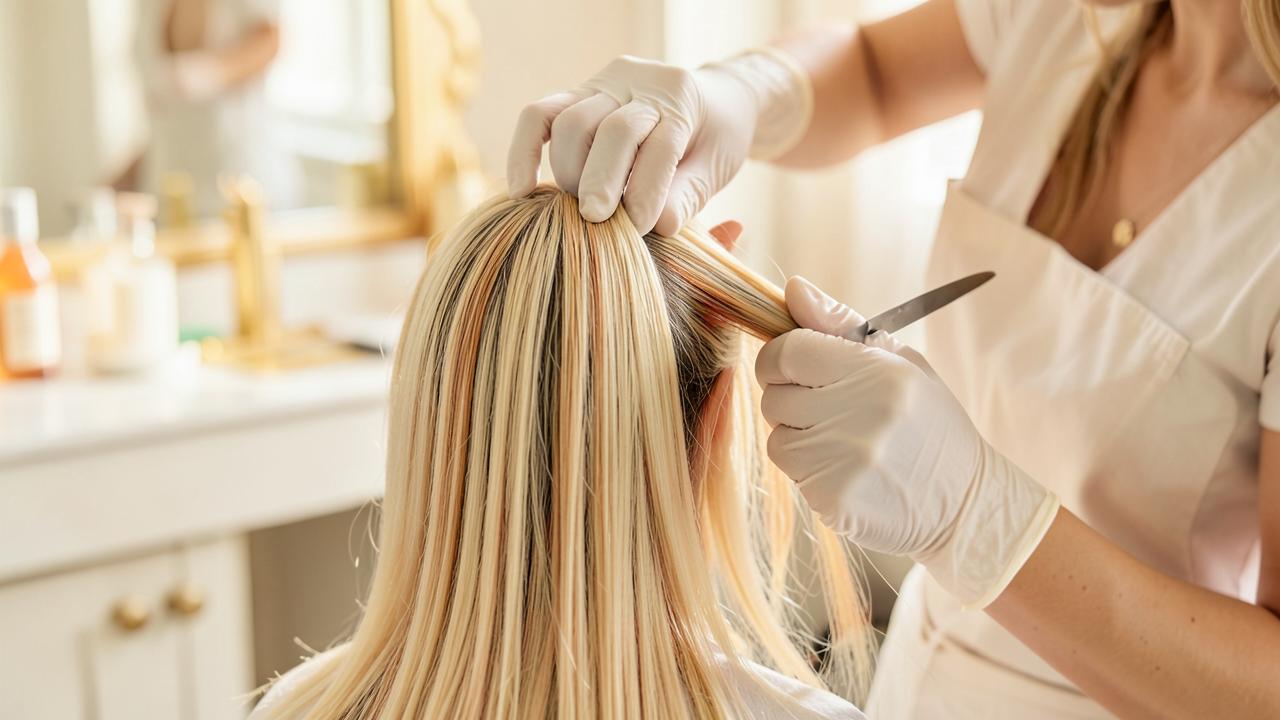
Can you do Nanoplastia on bleached or coloured hair? In most cases yes, including to a full 100% straight finish, provided a strand test sets the processing time and the number of thermal passes. Run the smoothing first and leave colour, bleaching or any other chemistry for after a safety interval. The decision is never made from the client's description of her colour history — it is made from what the strand does in your hands.
What previous chemistry actually changes
- Porosity rises, so the hair absorbs faster and can over-process at standard timings.
- Elasticity drops, so the strand tolerates fewer thermal passes.
- The length is rarely uniform: virgin regrowth, one-year-old colour and bleached ends behave differently on the same head.
The compatibility checklist
| Situation | How to proceed |
|---|---|
| Permanent colour or highlights | Strand test, then reduced processing on the most porous zone |
| Recent bleach (high lift) | Wait, rebuild the structure, then strand test before deciding |
| Henna or vegetable colour | Do not proceed without a compatibility test — henna can react unpredictably with heat |
| Metallic salts / progressive home dyes | High risk. Test a strand; if it heats, smokes or breaks, decline the service |
| Previously relaxed hair | Possible, with a strand test and conservative thermal sealing |
Order of services: Nanoplastia first, colour after
- 1Diagnose, strand test and, if the hair needs it, run a stand-alone reconstruction treatment first.
- 2Nanoplastia first — the smoothing service defines the structure and the finish you promised.
- 3Colour, bleaching or any other chemistry after a safety interval; the more aggressive the service, the longer the wait.
- 4Never bleach and smooth in the same appointment.
- 5If the tone needs adjusting after the smoothing, correct it with safe ammonia-free toners rather than a full colour service.
Why colour-protection technology matters here
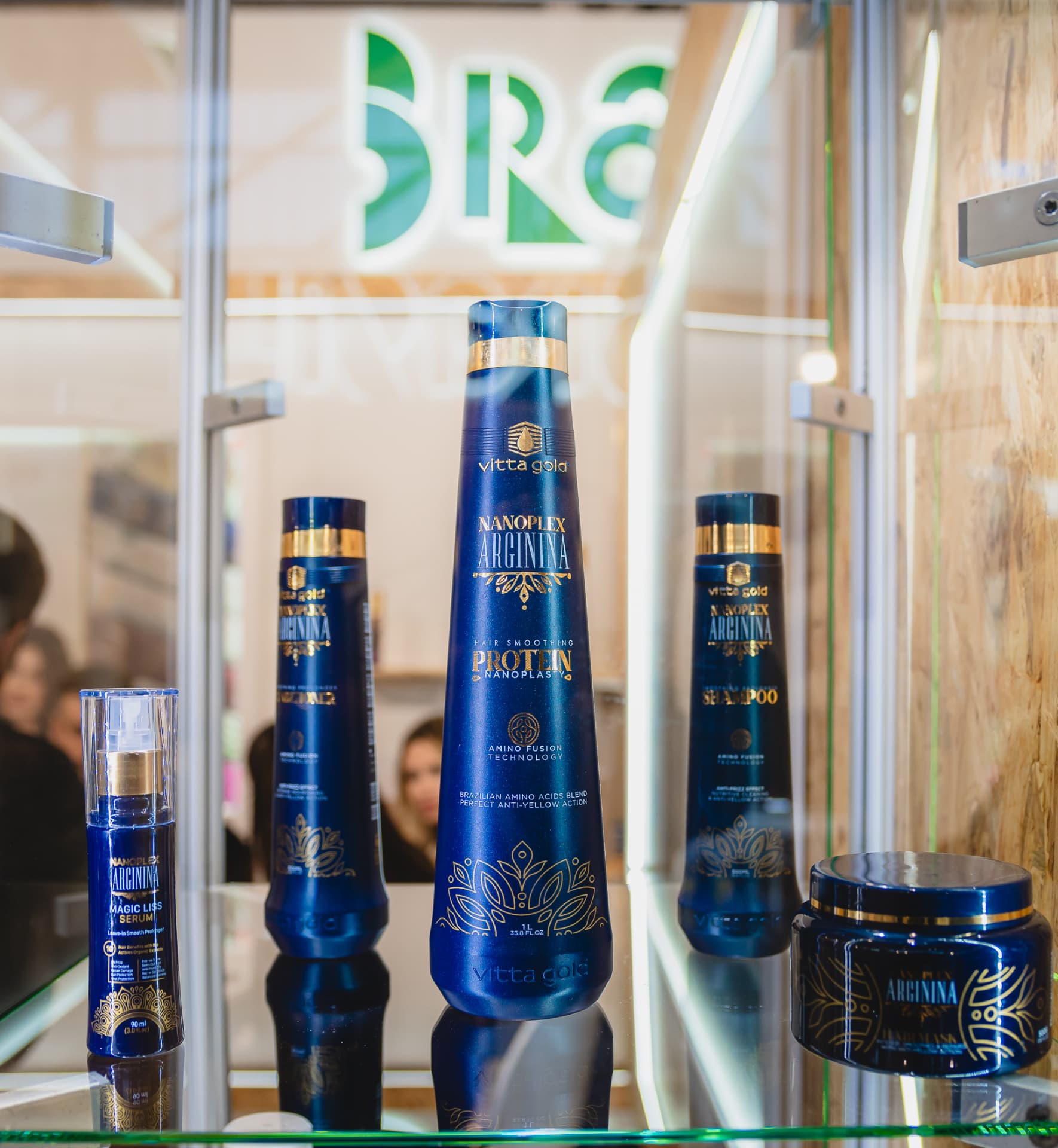
On blonde, highlighted, coloured or bleached hair the formula decides how much tone survives the service. A Nanoplastia built with colour-protection technology — a toning Violet Acid system — neutralises unwanted warmth while it smooths, so the client leaves with the tone she came in with, not a yellowed version of it. Nanoplex Arginina™ Amino Fusion carries that colour protection alongside amino-acid keratin and hydrolysed proteins, which is why it performs better on this hair than a neutral smoothing formula.
Managing the client's expectation
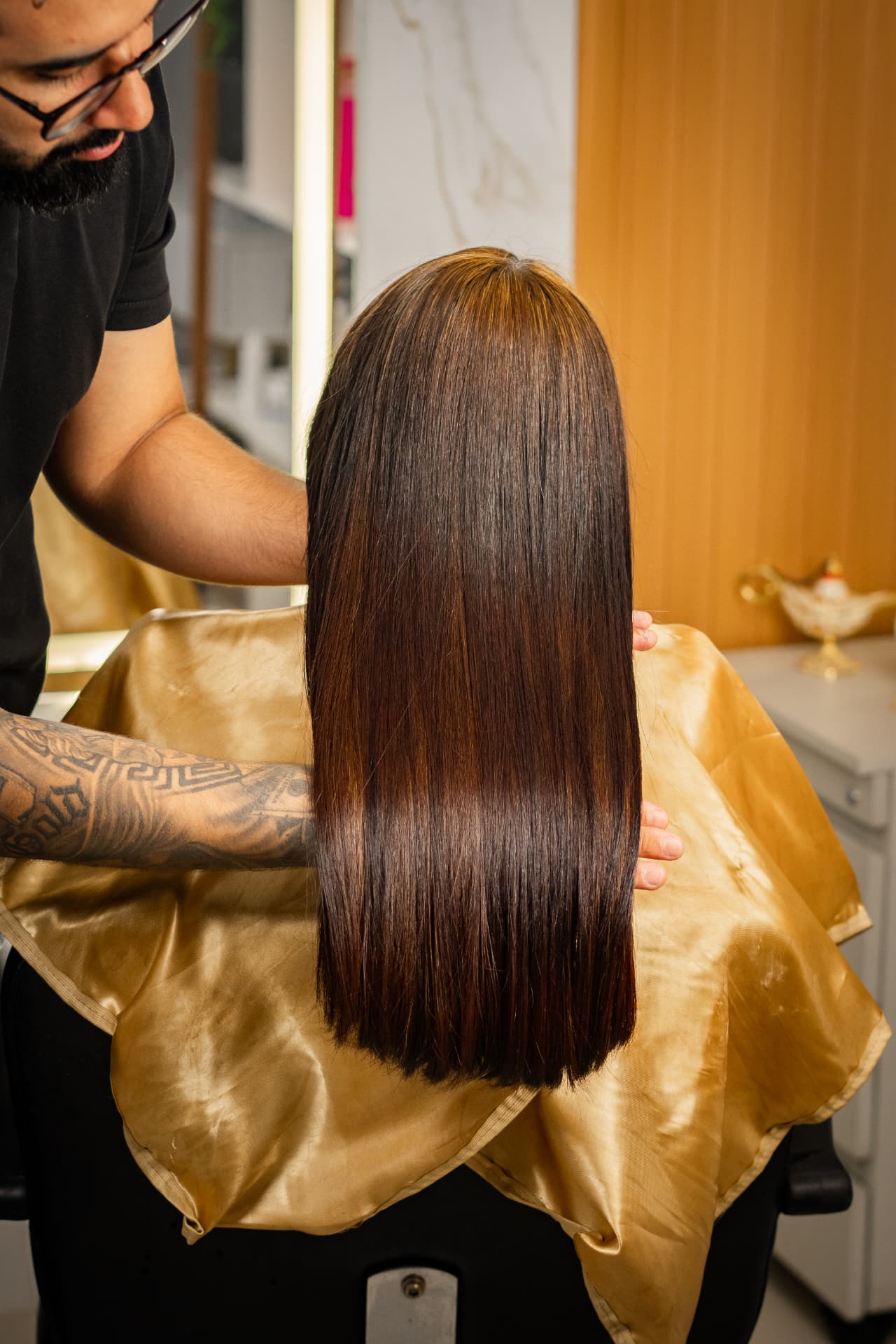
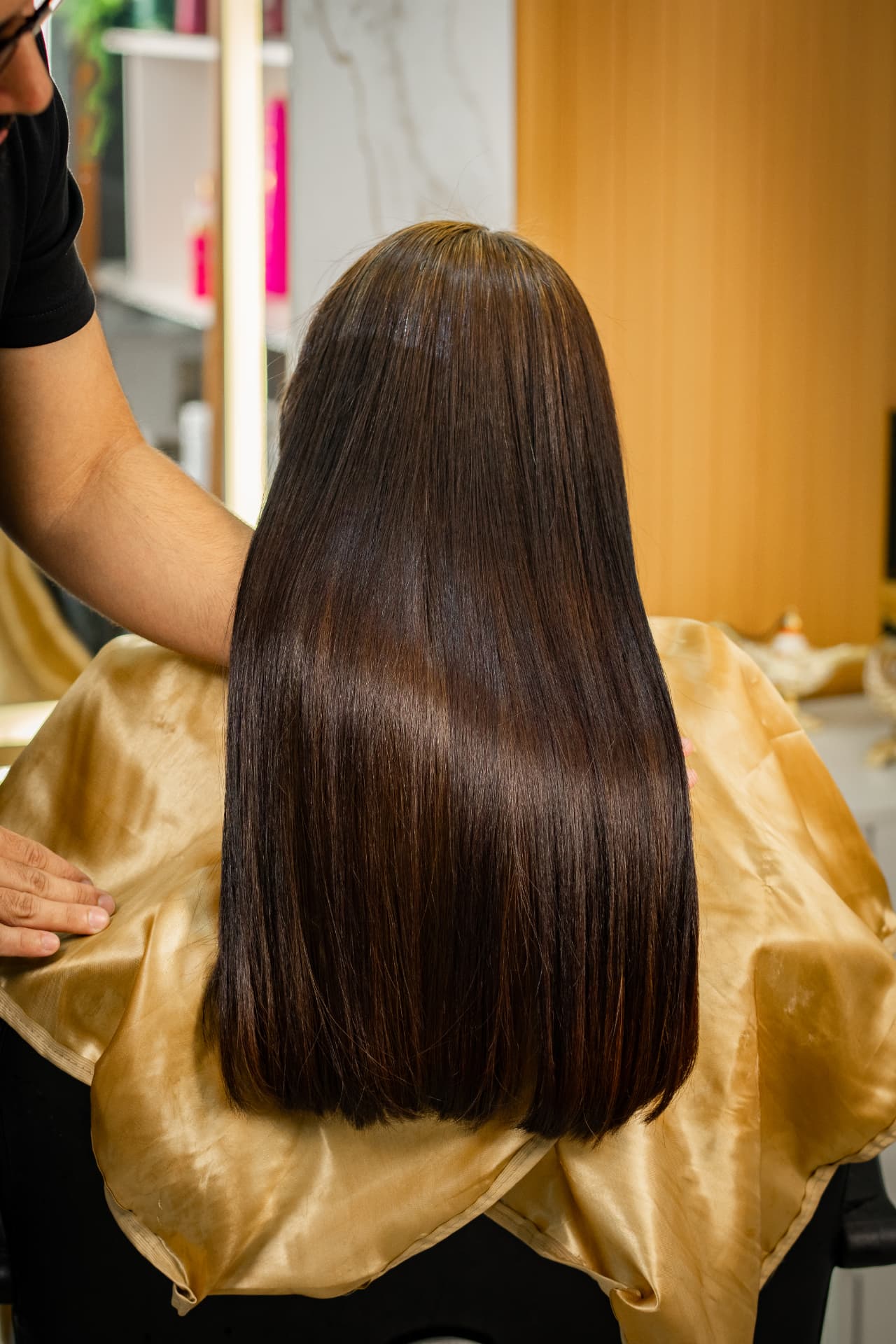
Colour-treated hair can absolutely reach a mirror-smooth 100% straight result. Where you may choose to stop short is not because the technique cannot go there, but because a compromised strand tolerates less heat. Say that clearly: 'today we protect the hair with a softer anti-frizz result, and in the next cycle we go to full straight'. That is a professional plan, not a downgrade.
Naming, so no one is misled
Keratin, protein treatment, hair botox and Nanoplastia are commercial labels within chemical hair smoothing. A Nanoplastia with hydrolysed keratin is a keratin treatment by composition; with hydrolysed proteins, a protein treatment. The real differences are raw-material quality and the smoothing active in use — glyoxylic acid, carbocysteine, pyrogallol, amino acid blends, formaldehyde and its releasers. Nanoplex Arginina™ Amino Fusion combines amino-acid keratin, hydrolysed proteins and Nanoplastia technology.
Sources
- Hair Cosmetics: An Overview — International Journal of Trichology (NIH/PMC) — Hair structure, cosmetic chemistry and how treatments act on the fibre
- American Academy of Dermatology — Healthy hair care and heat-styling guidance
- CosIng — European Commission — Cosmetic ingredient database for INCI names and restrictions
Free for professionals
8 Mistakes That Can Ruin Your Nanoplastia Results
The technical and commercial errors behind most failed services — skipped diagnosis, thick sectioning, improvised heat, weak aftercare and pricing that destroys your hourly rate — with the checklist to prevent each one.
Download the free guideFrequently asked questions
Can you do Nanoplastia on bleached hair?
Usually yes, after a strand test. Bleached hair is more porous and less elastic, so the test defines a shorter processing time and fewer thermal passes. Very recently or heavily bleached hair should be rebuilt first.
Can Nanoplastia be applied over henna?
Only after a compatibility test. Henna and especially compound henna with metallic salts can react with heat. Test a discreet strand with the full process before deciding.
Should colour come before or after Nanoplastia?
Nanoplastia first, colour after. Run the smoothing service, then wait a safety interval before colouring, bleaching or applying any other chemistry. If the tone needs a small adjustment sooner, use a safe ammonia-free toner.
Which Nanoplastia is best for blonde or bleached hair?
One with colour-protection technology. A toning Violet Acid system, as in Nanoplex Arginina™ Amino Fusion, controls unwanted warmth during the service and delivers better results on blonde, coloured and bleached hair.