
8 Mistakes That Ruin Nanoplastia Results (And How to Avoid Them)
The technical and commercial mistakes behind most failed Nanoplastia services — skipped diagnosis, thick sectioning, wrong heat — and the fix for each one.
Vitta Gold Academy · September 1, 2026 · 14 min read
Key takeaways
- Almost every rubbery, dull or short-lived result traces back to diagnosis, sectioning, processing time or thermal activation.
- Two of the eight mistakes are commercial, not technical — and they cost more money than the technical ones.
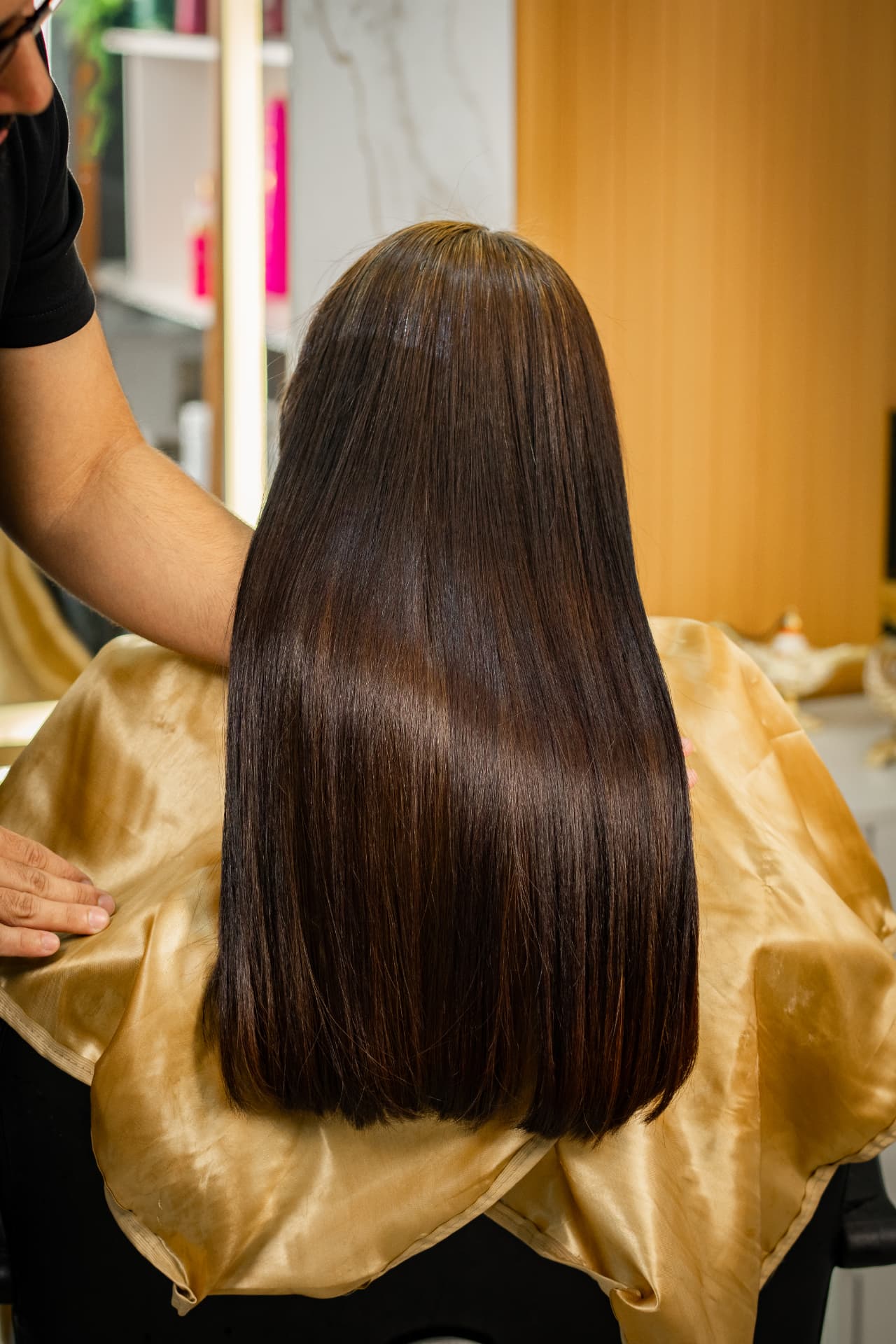
- Nanoplastia reaches 100% straight on any hair type when the full protocol is respected; most 'it didn't work on this hair type' complaints are a protocol failure, not a hair-type limit.
- A written protocol converts a good result into a repeatable one.
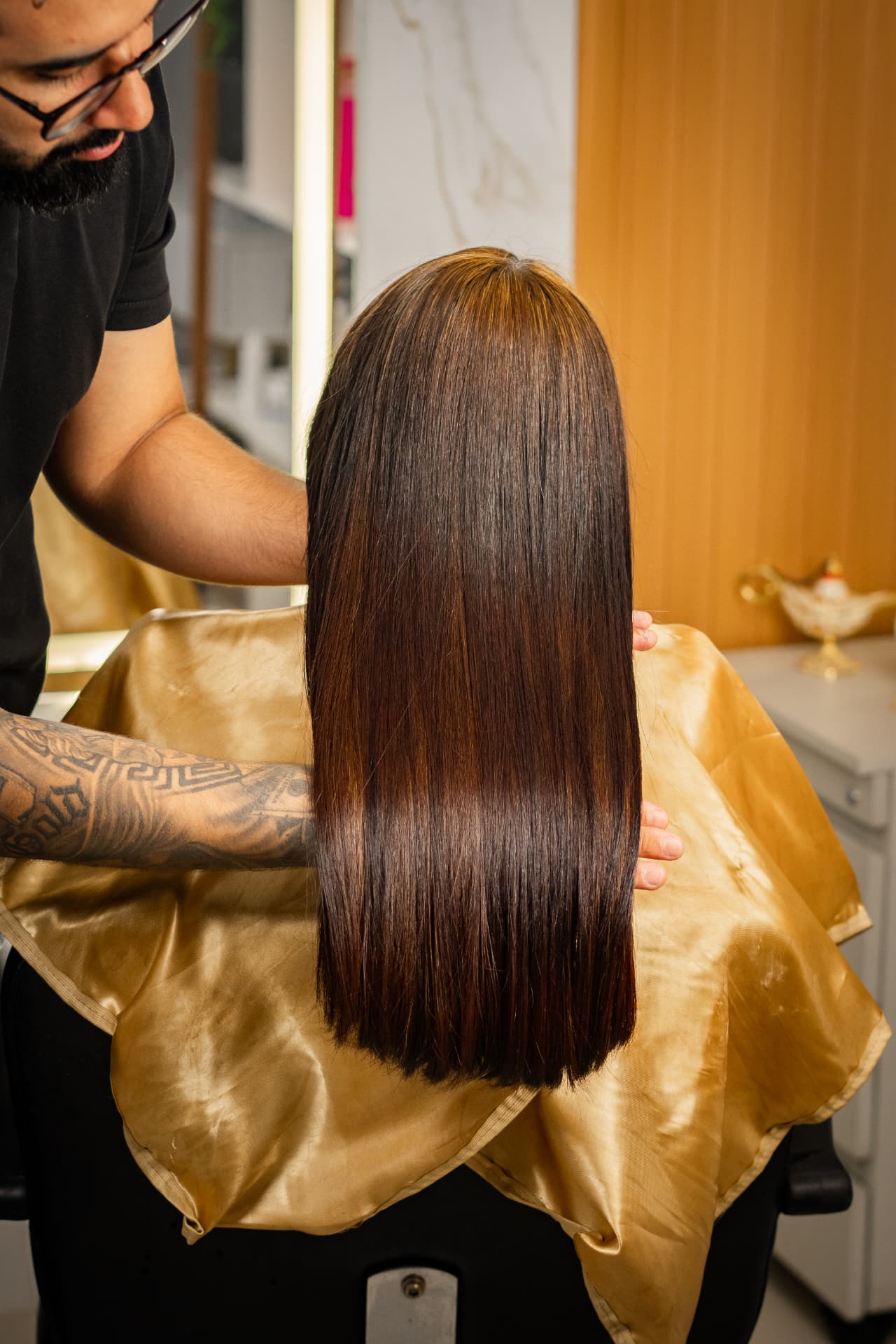
Why do Nanoplastia results fail? Almost always for eight reasons: no diagnosis, no strand test, sections that are too thick, the wrong moisture level, processing time cut short of the 40–60 minute window, thermal activation by habit instead of by diagnosis, no aftercare briefing, and pricing the service like a blow-dry. Each one is preventable with a written protocol, and none of them is a limitation of the hair itself.
This article is the public companion to our free professional guide of the same name. If you want the full version with the diagnostic checklists, download the ebook — it is free.
1. Skipping the diagnosis
Starting the service because the client is already in the chair is how professionals end up treating hair that needed reconstruction first. Porosity, elasticity and chemical history decide whether you proceed, adapt or postpone. Fix: a fixed diagnosis routine you run every time, written down in the client file, including the finish the client actually wants — 100% straight, anti-frizz natural, or curl definition.
2. Skipping the strand test on chemically treated hair
Bleached and highlighted hair is not automatically disqualified — but it is unpredictable, and the strand test is what turns an unknown into a decision. Fix: mandatory test whenever there is bleach, high-lift colour or repeated chemistry in the history.
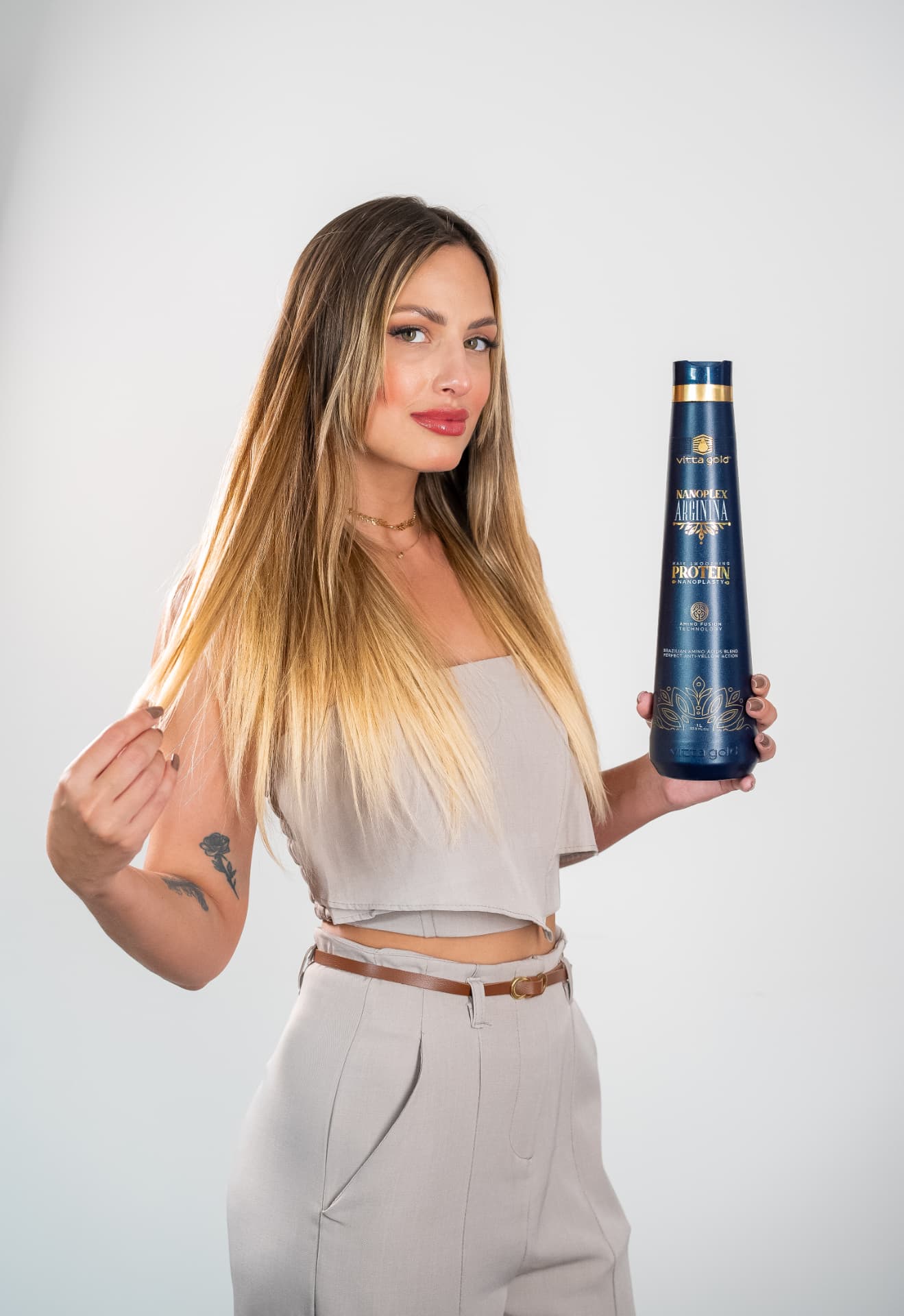
The other half of this mistake is order of service: Nanoplastia comes first, then colour, bleaching or any other chemistry after a safety interval — never in the same appointment. On blonde, coloured and bleached hair, a colour-protected, toning formula (Violet Acid, as in Nanoplex Arginina™ Amino Fusion) gives the best result, and any tonal correction afterwards should be done with a safe ammonia-free toner.
3. Sections that are too thick
Thick partings mean the inner face of the strand receives neither full product nor full heat. The result is a finish that looks fine at the mirror and falls apart after the first wash, or that never reaches a true 100% straight even though the stylist used the correct product and a full processing time. Fix: thin, even sections you can see light through, especially on dense or coily hair where this mistake is most common.
4. Wrong moisture level at application
Too wet dilutes the actives; too dry blocks penetration. Both push you towards over-compensating with heat later, which is how a moisture mistake at minute five becomes a burned, over-processed fibre at minute ninety. Fix: follow the moisture specification of the line you use, every time, instead of eyeballing it based on how the hair 'looks dry enough'.
5. Cutting processing time short
Leaving the product on for less than the specified range because the hair already looks smooth in the bowl is the mistake that produces the fastest-reverting results — often within two or three weeks instead of the usual 3 to 6 months. Fix: work inside the full 40–60 minute window and read the fibre — aligned and pliable, never slippery, never gummy — rather than judging by how the strand looks before it has even been dried.
6. Thermal activation by habit
The single most damaging mistake: carrying over a temperature and pass count from another product or another hair type. Fine and bleached hair needs less heat and fewer passes than resistant virgin hair, and a finish of anti-frizz natural movement needs a different sealing approach than a 100% straight result. Fix: match temperature and passes to the diagnosis and the chosen finish, and count passes deliberately.
7. No aftercare briefing
The client washes with a sulphate-heavy shampoo on day two and blames the treatment. Fix: a written aftercare card, the right home-care products offered at the chair, and a follow-up message in week one. A full maintenance calendar, including when to schedule a partial reapplication versus a full redo, is covered in our aftercare guide.
8. Pricing the service like a blow-dry
A three-hour premium service priced against a commodity menu turns your best skill into your worst hourly rate — and it also signals to the client that the service is ordinary. Fix: price on chair time, product cost and result, and present it as a signature service. Our pricing guide walks through the maths.
Is a disappointing result ever really the hair's fault?
Rarely, and it is worth saying plainly: Nanoplastia reaches 100% straight on any hair type, from fine European hair to dense, coily and afro-textured hair, and the finish can be adjusted to 100% straight, anti-frizz natural or curl definition on any of them. Almost every 'it just doesn't work on this hair type' conversation, once traced back, is actually one or more of the eight mistakes above — most often thick sectioning combined with under-processing on dense or resistant hair.
| Symptom at check-out or follow-up | Most likely mistake |
|---|---|
| Looked great at the chair, reverted within two weeks | Processing time cut short or incomplete thermal sealing |
| Patchy, straight in some panels and wavy in others | Sections too thick |
| Hair feels rubbery or stretches excessively | Over-processing or over-heating on compromised hair |
| Dull, flat finish on fine hair | Temperature or pass count carried over from a different hair type |
| Result faded unevenly faster at the root | No maintenance plan or rebooking discussed at check-out |
Why do the same mistakes keep happening in busy salons?
Most of these eight mistakes are not caused by a lack of skill — they are caused by time pressure on a busy day, a second client waiting, and a protocol that lives in someone's memory instead of on paper. A stylist who performs the service correctly nine times out of ten under normal conditions is exactly the stylist who will cut processing time short on the one day the schedule is overbooked, unless the protocol is written down somewhere everyone on the team checks the same way every time.
What should a written protocol actually include?
- The diagnosis questions and the strand-test trigger conditions, in one checklist.
- The exact processing-time range and the fibre signs that mean stop early.
- The temperature range and pass-count target for each hair condition the salon commonly sees.
- The aftercare script read aloud at check-out, every time, not only when there is time for it.
- The rebooking and follow-up message template, sent the same week for every client.
Turning this into a repeatable protocol
Reading the mistakes prevents some of them. Systematising your protocol prevents all of them. The Nanoplastia Professional Certification covers diagnosis, sectioning, processing, thermal activation and finishing with real-client footage, plus the commercial side — pricing, consultation and rebooking.
What should you do if a client complains days after the service?
A complaint a few days or weeks later is not automatically a sign the service failed — but dismissing it without a quick diagnostic conversation is how a fixable issue turns into a lost client and a bad review. Start by asking what shampoo she has used and how often, since a sulphate-heavy product can mimic under-processing within two to three weeks. Then check your own service record against the eight mistakes above: was the full 40–60 minute processing time respected, were sections thin enough, and were all strands fully sealed with the iron? If the record shows the protocol was followed, the fix is usually a product conversation and a retail recommendation. If it was not, the honest response is a corrective partial reapplication, not a defensive one — and it is exactly the kind of case a written protocol prevents from happening in the first place.
Sources
- U.S. Food and Drug Administration — Hair smoothing products that release formaldehyde when heated
- Hair Cosmetics: An Overview — International Journal of Trichology (NIH/PMC) — Hair structure, cosmetic chemistry and how treatments act on the fibre
- U.S. Occupational Safety and Health Administration — Occupational safety guidance for hair salons and smoothing services
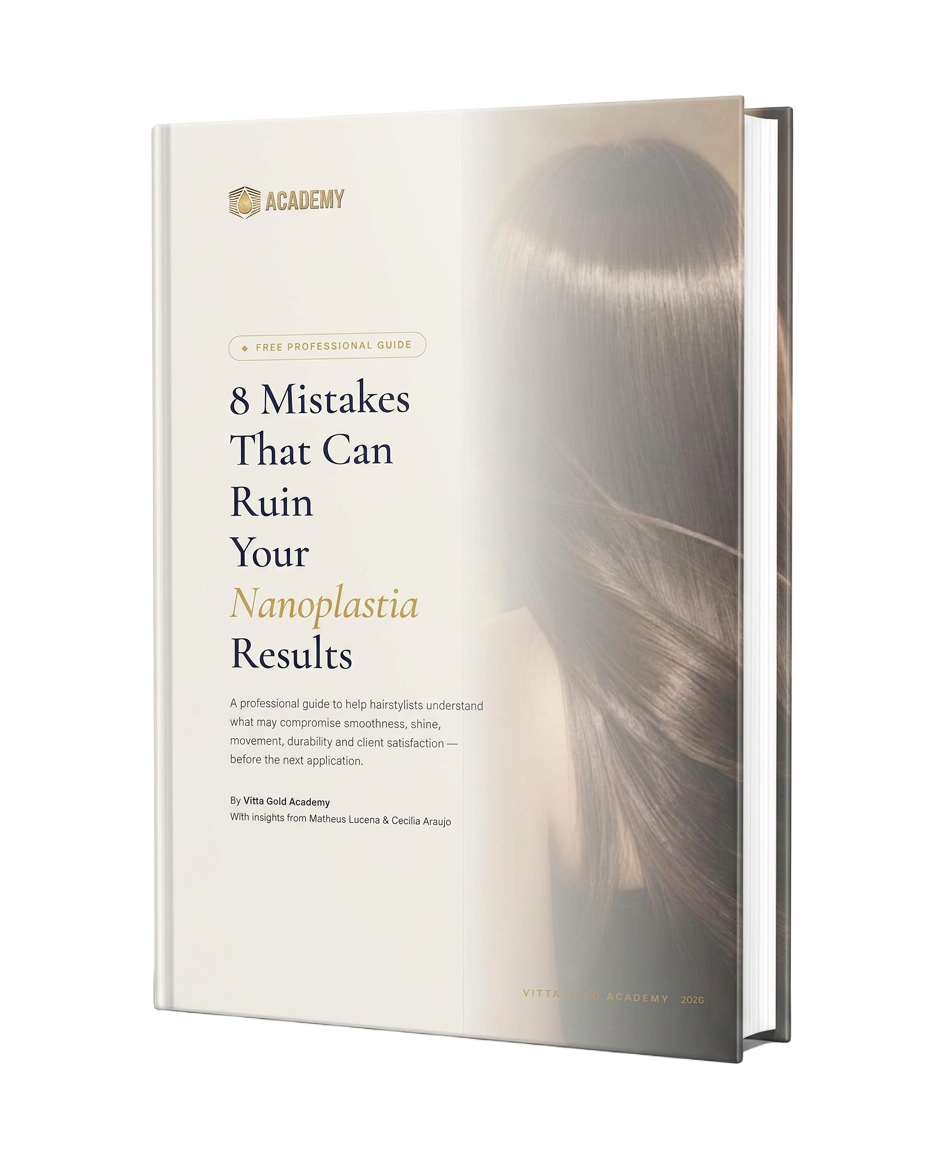
Free for professionals
8 Mistakes That Can Ruin Your Nanoplastia Results
The technical and commercial errors behind most failed services — skipped diagnosis, thick sectioning, improvised heat, weak aftercare and pricing that destroys your hourly rate — with the checklist to prevent each one.
Download the free guideFrequently asked questions
Why did my client's hair go rubbery during Nanoplastia?
Almost always over-exposure: too much processing time, too much heat, or too many iron passes on hair with compromised elasticity. Stop the service, reconstruct and reschedule.
Why is the hair not 100% straight after the service?
Under-processing, sections that were too thick, or incomplete thermal sealing. Nanoplastia reaches a 100% straight, mirror-smooth finish on any hair type when the technique is complete — thin sections, full 40–60 minute processing and sealing every strand. Lighter parameters deliberately give anti-frizz or natural movement instead.
Why did the result only last a few weeks instead of months?
Under-activation (short processing time or incomplete thermal sealing), sections that were too thick, or missing aftercare. All three are avoidable with a written protocol.
Can a Nanoplastia mistake be fixed on the same visit?
Some can. Thin sections or extra thermal passes can often be corrected before the client leaves. Over-processed or rubbery hair cannot be fixed with more heat — it needs reconstruction and a rescheduled service.
Is there a hair type Nanoplastia simply cannot straighten?
No. Nanoplastia reaches 100% straight on any hair type, including coarse, dense and coily textures. Apparent exceptions almost always trace back to one of the eight mistakes in this article, most often thick sectioning or cut-short processing time.
Should I use a clarifying shampoo before every Nanoplastia?
No, not by default. Use the cuticle-opening pre-treatment shampoo recommended by your system and reserve a stronger clarifying shampoo for cases with genuinely heavy product build-up.