
Nanoplastia vs Keratin vs Hair Botox: What Actually Differs
Nanoplastia vs keratin vs hair botox for salon professionals: how each works, best candidates, how long results last and what to charge, compared side by side.
Vitta Gold Academy · August 11, 2026 · 9 min read
Key takeaways
- The names are commercial: every one of these services is chemical hair smoothing, and a Nanoplastia with hydrolysed keratin or proteins is also a keratin or protein treatment.
- Keratin smooths by coating the cuticle, Nanoplastia realigns from inside the cortex and the cuticle together, hair botox repairs without realigning.
- Nanoplastia's finish is fully adjustable — 100% straight, natural anti-frizz, or curl definition — on any hair type; it is never limited to softening frizz.
- Choosing the wrong one for the client's hair is the most common cause of a disappointed client, not bad technique.
- Nanoplastia sits at the top of the price ladder because it is the only one that changes shape and quality at once.
What is the difference between Nanoplastia, keratin and hair botox? All three are chemical hair smoothing and the names are commercial. Keratin coats the surface, hair botox repairs without changing shape, and Nanoplastia realigns from the cortex and the cuticle together — reaching a fully adjustable 100% straight, natural anti-frizz, or curl-defined finish on any hair type.
Clients use these three names interchangeably. Professionals cannot. Each one solves a different problem, and the money you lose in this category is almost never lost in the application — it is lost in the moment you agreed to do the wrong service on the wrong hair.
First, the naming problem
"Keratin", "protein", "botox" and "Nanoplastia" are commercial names, not chemical categories. All of them describe chemical hair smoothing services. A Nanoplastia formula that contains hydrolysed keratin can accurately be called a keratin treatment; one built on hydrolysed proteins can be called a protein treatment. What actually differentiates one service from another is the smoothing active used — formaldehyde-free actives such as glyoxylic acid, pyrogallol and amino acid blends on one side, formaldehyde and its releasers on the other — and the quality of the raw materials behind it.
The one-line difference
- Keratin smoothing: coats and seals the fiber to reduce frizz. Surface-first.
- Nanoplastia: delivers low-molecular-weight actives into the cortex and the cuticle at the same time and fixes a new alignment with heat. Structure-first, and fully adjustable — 100% straight on any hair type, a natural anti-frizz finish, or defined curls, as the client prefers.
- Hair botox: a deep reconstruction mask that fills and conditions. Quality-first, with no real realignment.
How does each one actually act on the hair?
Keratin smoothing services deposit hydrolysed keratin and a smoothing active onto and just inside the cuticle, which fills porosity, adds shine and reduces frizz, but does little to change the internal bonds that hold the hair's natural shape. That is why a keratin-coating result often relaxes gradually from the first wash rather than growing out the way a true realignment does.
Hair botox is formulated as an intensive reconstruction treatment — amino acids, proteins, oils and conditioning agents designed to fill and repair the fiber rather than reorganise its shape-holding bonds. It is an excellent choice for hair that needs repair before it is ready for any realignment service, but it was never designed to deliver a straight finish.
Nanoplastia is different because its low-molecular-weight actives reach the cortex — where the bonds that determine the hair's shape actually live — while simultaneously acting on the cuticle to restore shine and manageability. Because it works on both layers together, and because the professional controls processing time, sectioning and thermal sealing, the same system can be taken all the way to 100% straight, stopped at a natural anti-frizz finish, or used to define and elongate curls.
Side-by-side comparison
| Nanoplastia | Keratin smoothing | Hair botox | |
|---|---|---|---|
| Main effect | Realignment + shine + quality, up to 100% straight | Frizz control, straightening | Repair, softness, volume control |
| Where it acts | Cortex + cuticle, together | Cuticle / surface | Cuticle and outer cortex |
| Finish control | Fully adjustable: 100% straight, natural anti-frizz, or curl definition | Straight, often flattened | Natural, no realignment |
| Typical processing time | 40–60 minutes | Varies by formula | Varies by formula |
| Typical duration | 3–6 months | 2–5 months | 4–8 weeks |
| Best for | Any texture — from mirror-straight to anti-frizz with gloss | Frizz control on the surface | Damaged hair not ready for realignment |
| Ticket position | Premium | Mid to premium | Entry |
How to choose in the consultation
- 1Diagnose porosity and elasticity first. Elastic, over-processed hair is a hair-botox client today, not a realignment client.
- 2Ask what the client wants to see in the mirror: 100% straight, smooth-with-movement, or defined curls. Nanoplastia covers all three — the finish is decided by the technique, not by the limits of the product.
- 3Check the colour history. Bleached hair does not disqualify Nanoplastia, but it makes the strand test non-negotiable — and the order is Nanoplastia first, colour or bleaching only after a safety interval.
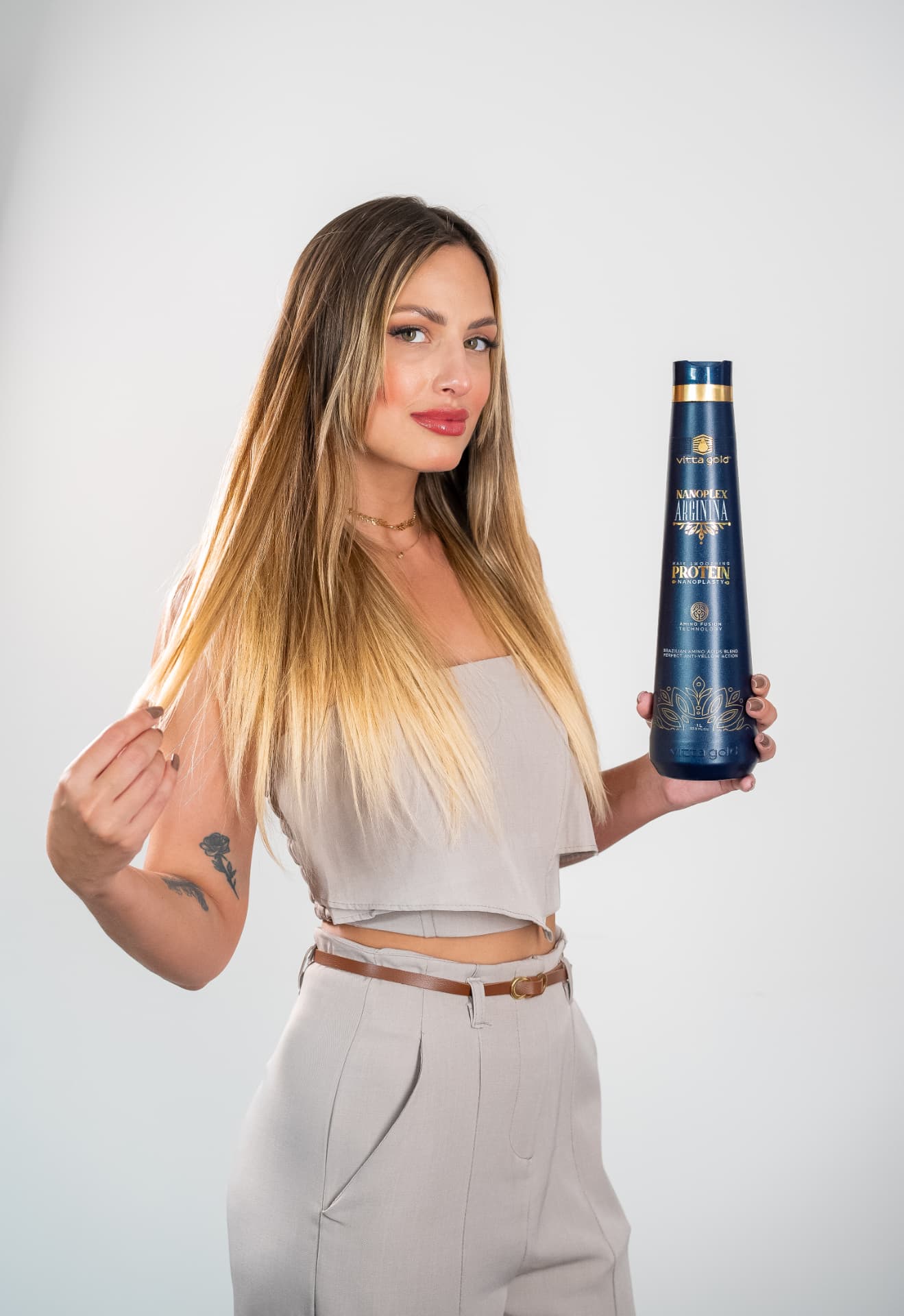
- 4On blonde, coloured or bleached hair, prefer a colour-protected, toning formula (Violet Acid, as in Nanoplex Arginina™ Amino Fusion) and adjust the tone afterwards with an ammonia-free toner if needed.
- 5Set expectations on processing time. A full 40 to 60 minute chemical process is what the cortex needs to complete the realignment; neither service nor price should be discounted for a shorter sit.
- 6Match to budget honestly. Selling a premium realignment to someone who wanted a 45-minute fix creates a refund, not a client.
Can they be combined?
Not in one appointment. Sequenced, yes: reconstruct compromised hair first, then realign in a separate session once porosity and elasticity are back in range. Combining reconstruction and realignment on the same day is one of the classic routes to rubbery, over-processed strands.
Sequenced, yes — combined in one appointment, no. The common professional path for compromised hair is a reconstruction cycle first, then realignment once elasticity and porosity are back in range. Trying to do both in a single session is one of the classic ways to end up with rubbery strands.
What about pricing?
Because Nanoplastia changes both shape and fiber quality, and because it takes longer in the chair and requires a trained protocol, it is priced above a typical keratin smoothing menu item and well above a hair botox touch-up. A full breakdown of how to price the service by length, density and chair time is covered in the dedicated pricing guide.
Why Nanoplastia earns the premium slot
It is the only one of the three that changes the shape and the perceived quality of the hair in the same service, and it does so without the compliance baggage that pushed older smoothing chemistry out of many markets. That combination is what allows a salon to price it as a signature service rather than a commodity.
If you are building this into your menu, the free 8-mistakes guide covers the diagnostic errors behind most failed services, and the certification course covers the full decision tree lesson by lesson.
Sources
- Hair Cosmetics: An Overview — International Journal of Trichology (NIH/PMC) — Hair structure, cosmetic chemistry and how treatments act on the fibre
- U.S. Food and Drug Administration — Hair smoothing products that release formaldehyde when heated
- CosIng — European Commission — Cosmetic ingredient database for INCI names and restrictions
Free for professionals
The Nanoplastia Starter Blueprint
The 20-page beginner guide: the six-move roadmap, the starter kit, the six-stage professional system, the pricing framework and a 21-day plan to launch the service in your salon.
Download the blueprintFrequently asked questions
Is Nanoplastia stronger than keratin?
They are not opposites — both are chemical smoothing, and a Nanoplastia containing hydrolysed keratin is also a keratin treatment. In practice keratin services coat the surface; Nanoplastia realigns from the cortex and the cuticle together, and it can reach a 100% straight finish on any hair type, including the most resistant, or be worked lighter for a natural anti-frizz result or defined curls. The professional controls the finish.
Which one gives 100% straight hair?
Nanoplastia. It works in the cortex and the cuticle together and can take any hair type, including coarse, afro and highly resistant textures, to a 100% straight, mirror-smooth finish. Keratin services mainly smooth the surface, and hair botox repairs without realigning the shape at all.
Which lasts longer, Nanoplastia or keratin?
Nanoplastia typically holds three to six months, depending on hair type, technique and home care. Because it realigns inside the fiber rather than coating it, the result grows out rather than washing off, which is why it usually outlasts a surface keratin service.
Can I do hair botox and Nanoplastia on the same day?
No. Reconstruct first, then realign in a separate appointment once porosity and elasticity are back in range.
Does Nanoplastia only reduce frizz, or can it fully straighten hair?
It can do both, by design. The same system reaches a full 100% straight, mirror-smooth finish with complete processing and sealing, or stops at a natural anti-frizz finish with movement if that is what the client wants. It is never limited to only softening frizz.
How long does Nanoplastia processing take compared to keratin or botox?
Nanoplastia needs a full 40 to 60 minute chemical processing window to complete the realignment inside the cortex, regardless of how the hair looks on the surface. Keratin and hair botox processing times vary by formula and are typically shorter because they are not realigning the internal fiber structure to the same degree.
Can Nanoplastia be used for curl definition instead of straightening?
Yes. Because the professional controls product distribution, processing time and thermal sealing, the same Nanoplastia system can be adjusted to define and elongate curls instead of flattening them, rather than only offering a straight result.