
How Much to Charge for Nanoplastia: Pricing and Profit per Client
How to price Nanoplastia in the US, Canada and UK: chair-time maths, product cost, keratin positioning, retail attach and the rebooking cycle.
Vitta Gold Academy · September 1, 2026 · 11 min read

Key takeaways
- Price on chair time and result, never against the cheapest smoothing service in your area.
- Product cost per service is usually a small fraction of the ticket — your time is the real cost.
- Nanoplastia reaches 100% straight on any hair type, with the finish adjustable to natural anti-frizz or curl definition, and lasts 3 to 6 months.
- Home-care retail and a scheduled rebooking are where a Nanoplastia client becomes a Nanoplastia account.
How much should you charge for Nanoplastia? Price on chair time, not on the cheapest smoothing service nearby. Add your target hourly rate multiplied by service hours, real product grams, consumables, assistant time and a rework reserve, then set three prices by hair length, commonly landing between $250 and $600. Home-care retail and scheduled rebooking carry the margin after the chair time is covered.
Nanoplastia is a two-to-three-hour, high-skill service that works in both the cortex and the cuticle, reaches 100% straight on any hair type, and can also be dialed to a natural anti-frizz finish or curl definition depending on the consultation. Priced correctly, it is the strongest hourly return on most salon menus. Priced by comparison shopping against a basic blowout or a discount keratin service, it is a very tiring way to earn a blow-dry rate. This is the framework we teach inside the certification.
Step 1: know your hourly floor
Take your monthly fixed costs — rent, utilities, software, insurance, staff — divide by the number of realistically bookable chair hours in a month, and you have the number every hour must cover before you earn anything. Most professionals who feel busy and broke have never calculated it. This single number, more than any competitor's menu, should anchor every price you set.
What does a Nanoplastia service actually cost to deliver?
| Component | How to calculate | Typical share of the ticket |
|---|---|---|
| Chair time | Hours of the service (2–3h) × your target hourly rate | Largest cost component |
| Product | Actual grams used per length category, not per bottle — roughly one tenth of a 1L bottle per full head | Small, often under 10% |
| Consumables | Gloves, capes, towels, bowl, brush, laundry | Minor |
| Assistant time | If someone washes or preps, it is a real cost | Variable |
| Rework reserve | A small percentage set aside for corrections | Should trend toward zero with correct diagnosis |
Run this once for short, medium and long hair and you will have three prices instead of one — which also removes the awkward mid-service conversation about length surcharges. A 1L professional bottle typically covers around ten full-head applications, which is the baseline most salons use to calculate product cost against the service price.
Why can Nanoplastia be priced above a basic keratin service?
Because the finish is a choice rather than a limitation. Nanoplastia can take any hair type — straight, wavy, curly or coily — to 100% straight, or instead deliver a natural anti-frizz result or defined curls, decided with the client at consultation. Because the active works inside the cortex and on the cuticle, the result holds for 3 to 6 months rather than fading in a few weeks. That range of outcomes and that duration are exactly what justify a signature-service price rather than a commodity price.
Step 2: position, don't compare
- Anchor against your own premium services, not against the salon down the street.
- Sell the outcome and the protocol: diagnosis, strand test, 40–60 minute processing, documented aftercare.
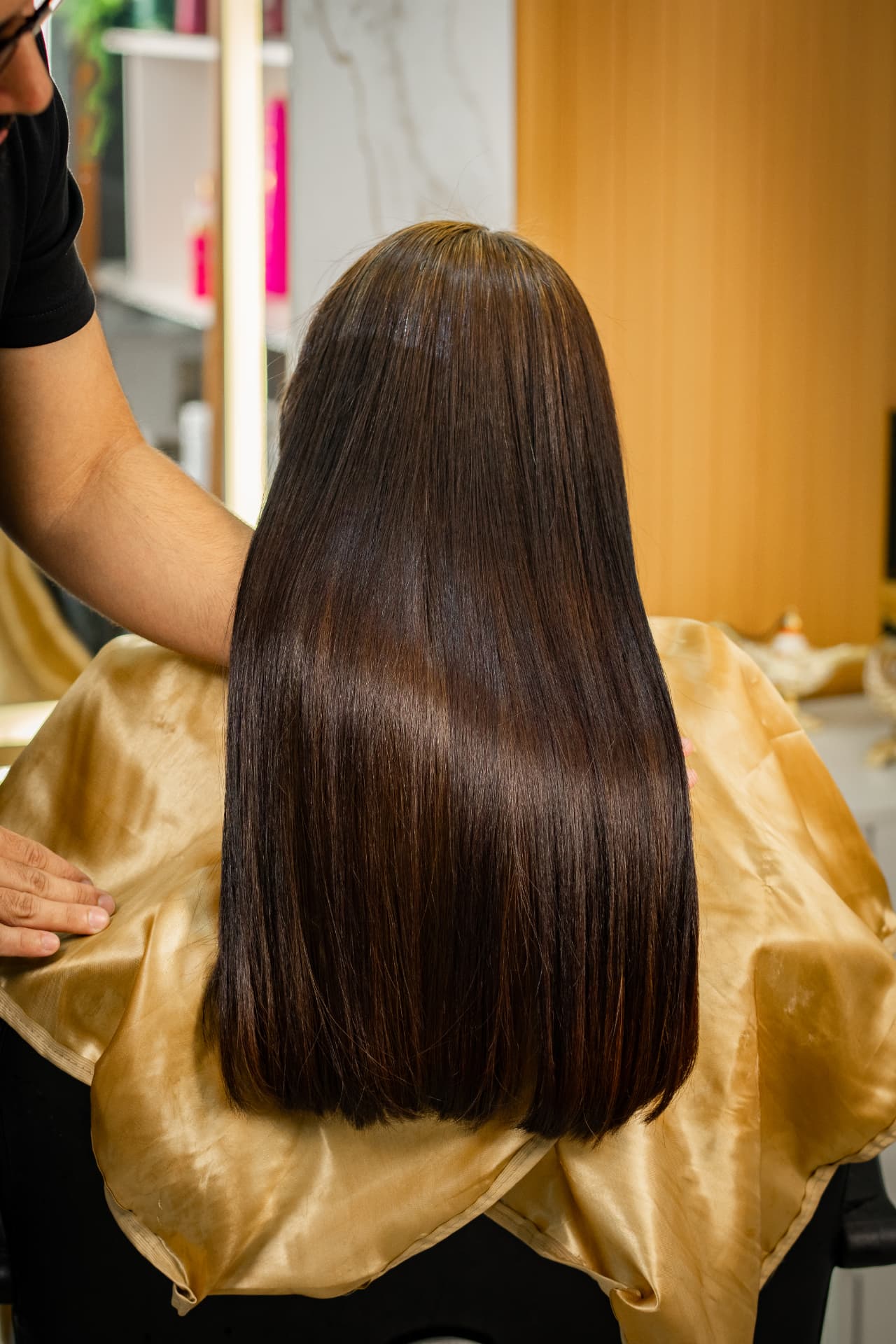
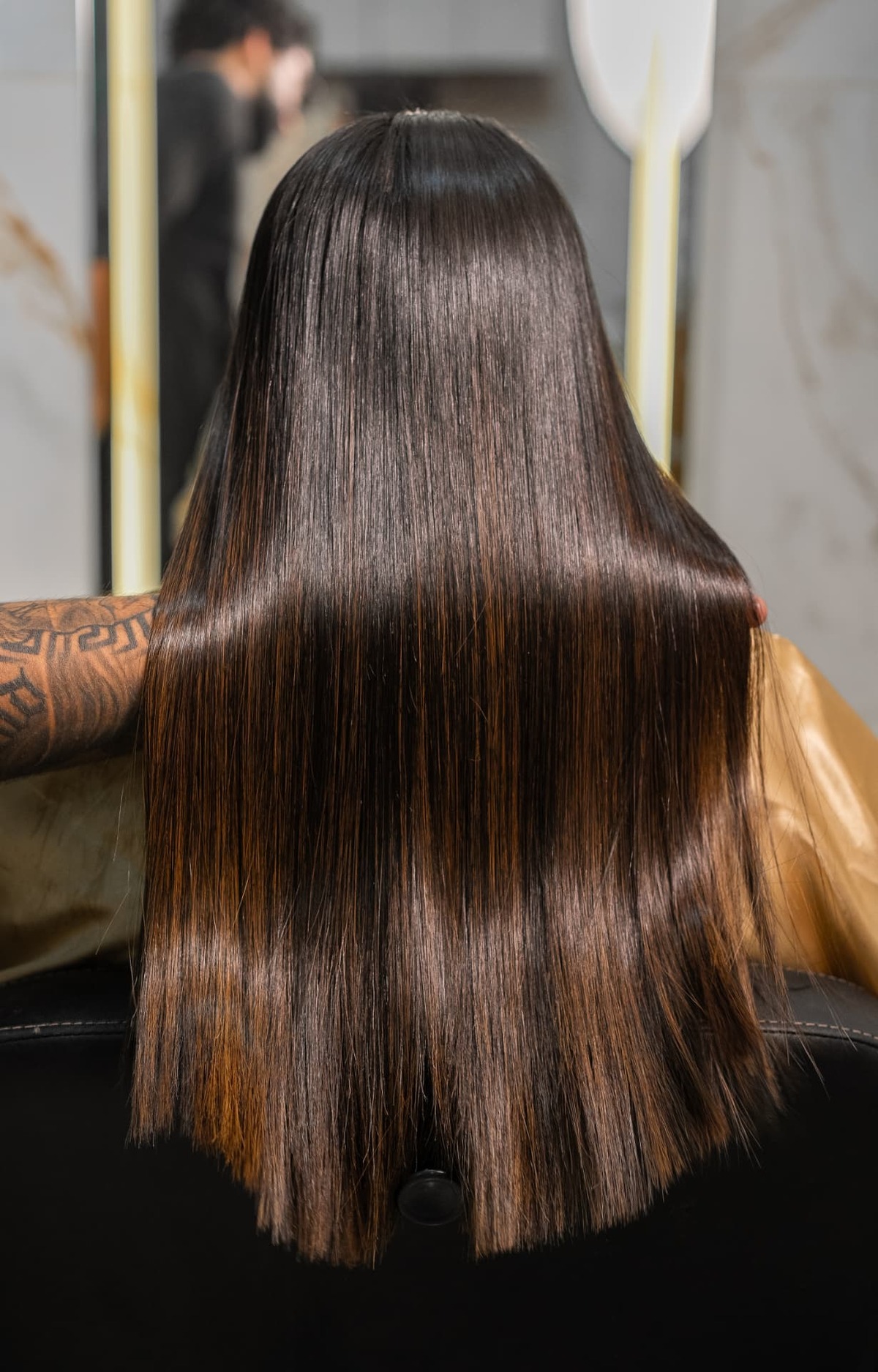
- Show before-and-after work from your own chair — it justifies more price than any discount ever wins.
- Never discount the service; if you must move price, add value (home care, a finishing appointment).
Step 3: how do you engineer the rebooking cycle?
Nanoplastia lasts 3 to 6 months, so the rebooking cycle is built into the service. Book the next appointment at the chair, follow up in week one, and send a maintenance reminder as the result starts to loosen. Three touches turn a one-off into predictable annual revenue.
Because the finish is adjustable, the rebooking conversation can also upsell: a client who chose 100% straight for a season may ask for natural anti-frizz with more movement next time, or vice versa. That flexibility keeps the service relevant across a client's changing preferences instead of being a one-time transformation she only books once.
Step 4: raise price with proof, not apology
The professionals who raise prices successfully raise them behind visible proof: a certification, a documented protocol, a portfolio of results. That is exactly why the certification pays for itself — not because of the certificate on its own, but because of what you can charge once your results are repeatable across every hair type that walks in.
The Nanoplastia Professional Certification includes the commercial modules — consultation, pricing, positioning and rebooking — alongside the technical protocol, plus first-year access to the Vitta Gold Experts partner program with partner pricing on the Nanoplex Arginina™ line. More than 15,000 salons already use Vitta Gold products, which gives certified professionals a recognizable standard to point to with clients.
How does national stylist pay affect what you can charge?
Pricing power tracks closely with regional stylist pay. The U.S. Bureau of Labor Statistics reports the median annual wage for hairdressers, hairstylists and cosmetologists at roughly $35,000–$37,000, with the top earners well above $70,000 — salons in higher cost-of-living, higher-wage metro markets can typically sustain prices at the top of common ranges, while salons in lower-wage markets should still price from their own chair-time math rather than undercutting it to match a national average.
What goes wrong when salons price Nanoplastia too low?
Underpricing a multi-hour chemical service creates three compounding problems: it attracts price-driven clients who churn instead of rebooking, it pressures stylists to cut the 40–60 minute processing time to protect their hourly earnings, and it signals to clients that the service is a commodity rather than a specialized result. All three work against the exact outcome — a durable, 100% straight or anti-frizz finish lasting 3 to 6 months — that justifies the price in the first place.
A service priced by comparison shopping pays your rent. A service priced by chair time and result pays your business.
How do you handle clients who ask for a lower price?
Explain what the price covers rather than defending the number itself: full diagnosis, 40 to 60 minutes of processing, correct thermal sealing, and a result that holds for 3 to 6 months on any hair type. Clients who understand what they are paying for rarely push back on a fair price, and the ones who still only want the lowest number were unlikely to become loyal, rebooking clients regardless of the discount offered.
How should a menu present multiple finish options?
List the service once, by hair length, and note at the bottom of the menu that the finish — 100% straight, natural anti-frizz, or curl definition — is chosen together with the client at consultation. This avoids creating three separate line items for what is really one service with a tailored outcome, keeps the menu simple to read, and gives the stylist room to guide the client toward the healthiest choice for her hair and lifestyle rather than one dictated by a menu label.
What should new Nanoplastia providers avoid when setting first prices?
- Copying a nearby salon's price without knowing their cost structure or chair-time rate.
- Pricing the same for every hair length to keep the menu 'simple.'
- Treating product cost as the main expense instead of chair time.
- Offering an opening discount that is hard to walk back after a few months.
- Skipping a documented consultation step that would justify a higher price at the chair.
Sources
- U.S. Bureau of Labor Statistics — Occupational outlook and wage data for hairdressers, hairstylists and cosmetologists
- U.S. Small Business Administration — Calculate your startup and operating costs
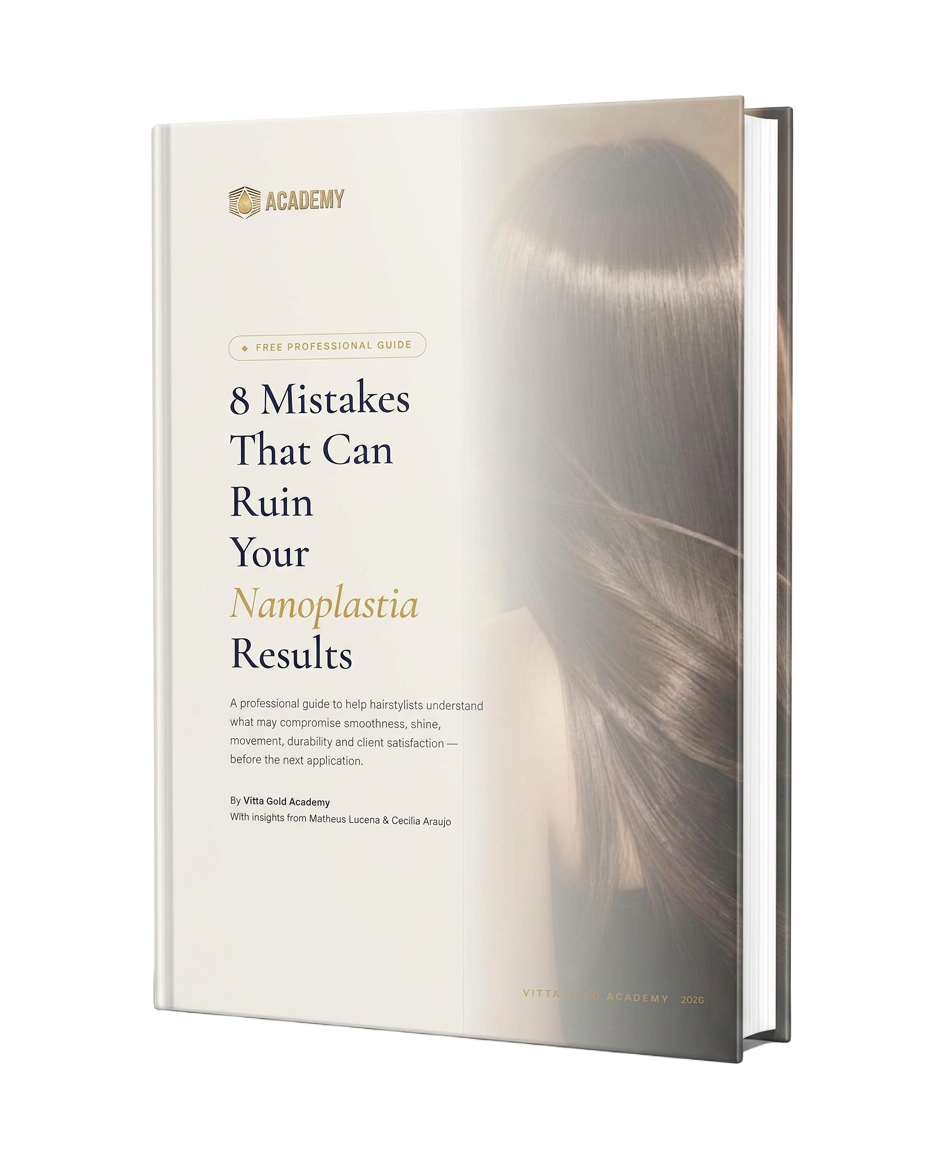
Free for professionals
8 Mistakes That Can Ruin Your Nanoplastia Results
The technical and commercial errors behind most failed services — skipped diagnosis, thick sectioning, improvised heat, weak aftercare and pricing that destroys your hourly rate — with the checklist to prevent each one.
Download the free guideFrequently asked questions
How much does Nanoplastia cost in a salon?
It varies widely by market and hair length, but commonly runs $250 to $600. Rather than copying a local price, calculate chair time plus product and consumables against your hourly floor, and set three prices by hair length.
How often will a Nanoplastia client rebook?
Every 3 to 6 months, since that is how long the result holds depending on hair type, technique and home care. Booking the next appointment before the client leaves, plus a home-care system at the chair, is what makes that cycle predictable.
Why can Nanoplastia be priced above a basic keratin service?
Because it works in the cortex and the cuticle, reaches 100% straight on any hair type, can also deliver natural anti-frizz or curl-definition finishes, and lasts 3 to 6 months. That range of outcomes is what justifies a signature-service price.
Should I discount Nanoplastia to attract new clients?
No. Discounting a premium multi-hour service attracts price-driven clients who do not rebook. Add value instead — home care, a finishing visit, or a maintenance package.
How much of the price is product cost?
Usually a small fraction. A 1L professional bottle covers around ten full-head applications, so product cost per service is typically far smaller than the value of your chair time.
Does processing time affect how much I should charge?
Yes. The full 40 to 60 minute processing time, plus correct thermal sealing, is what earns the 3-to-6-month result clients are paying for. Shortening it to save chair time undercuts the exact outcome you are charging a premium for.
Does certification help justify a higher price?
Yes. Stylists who can show a certification, a documented protocol and their own before-and-after results hold higher prices with far less resistance than those who compete purely on discounts.