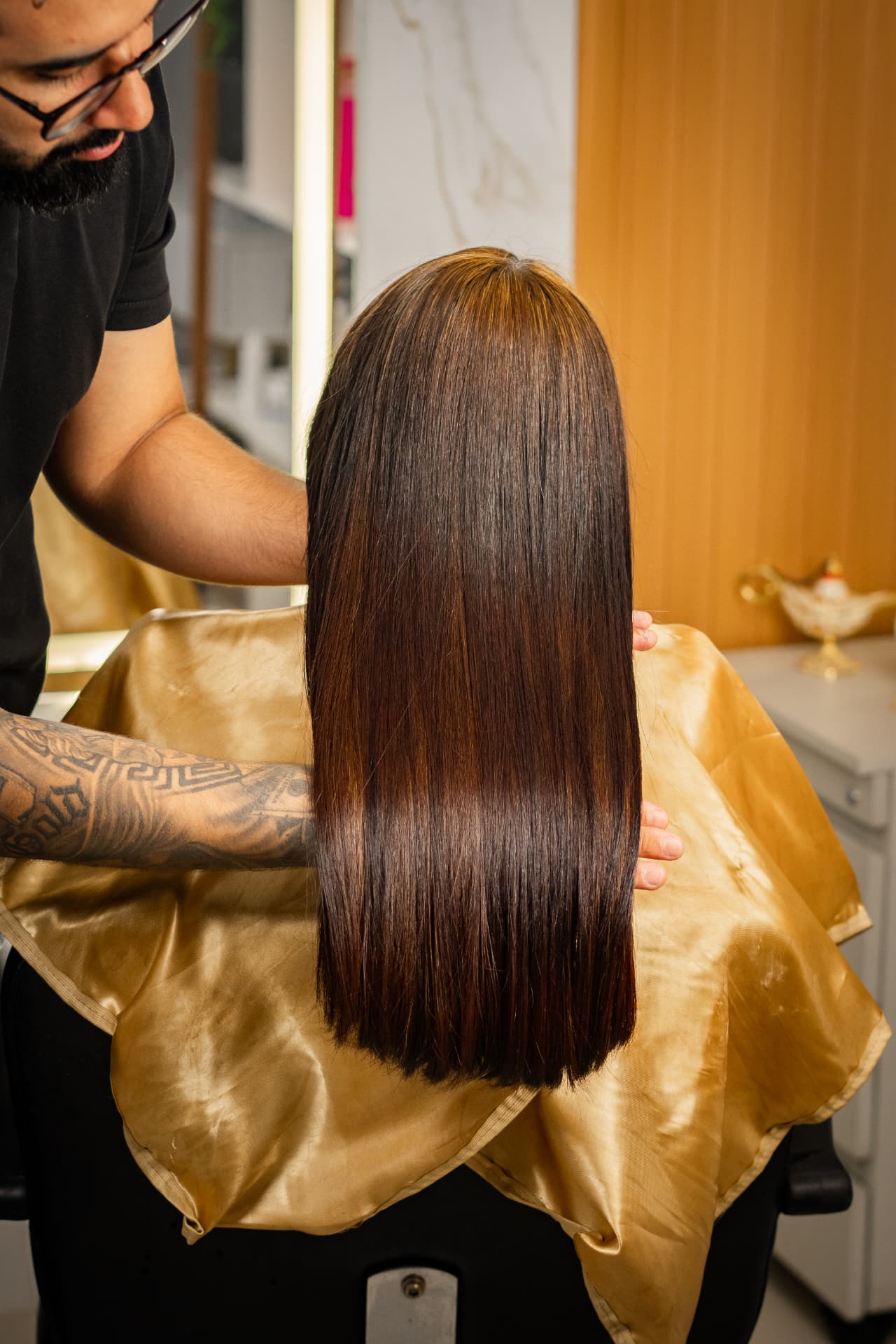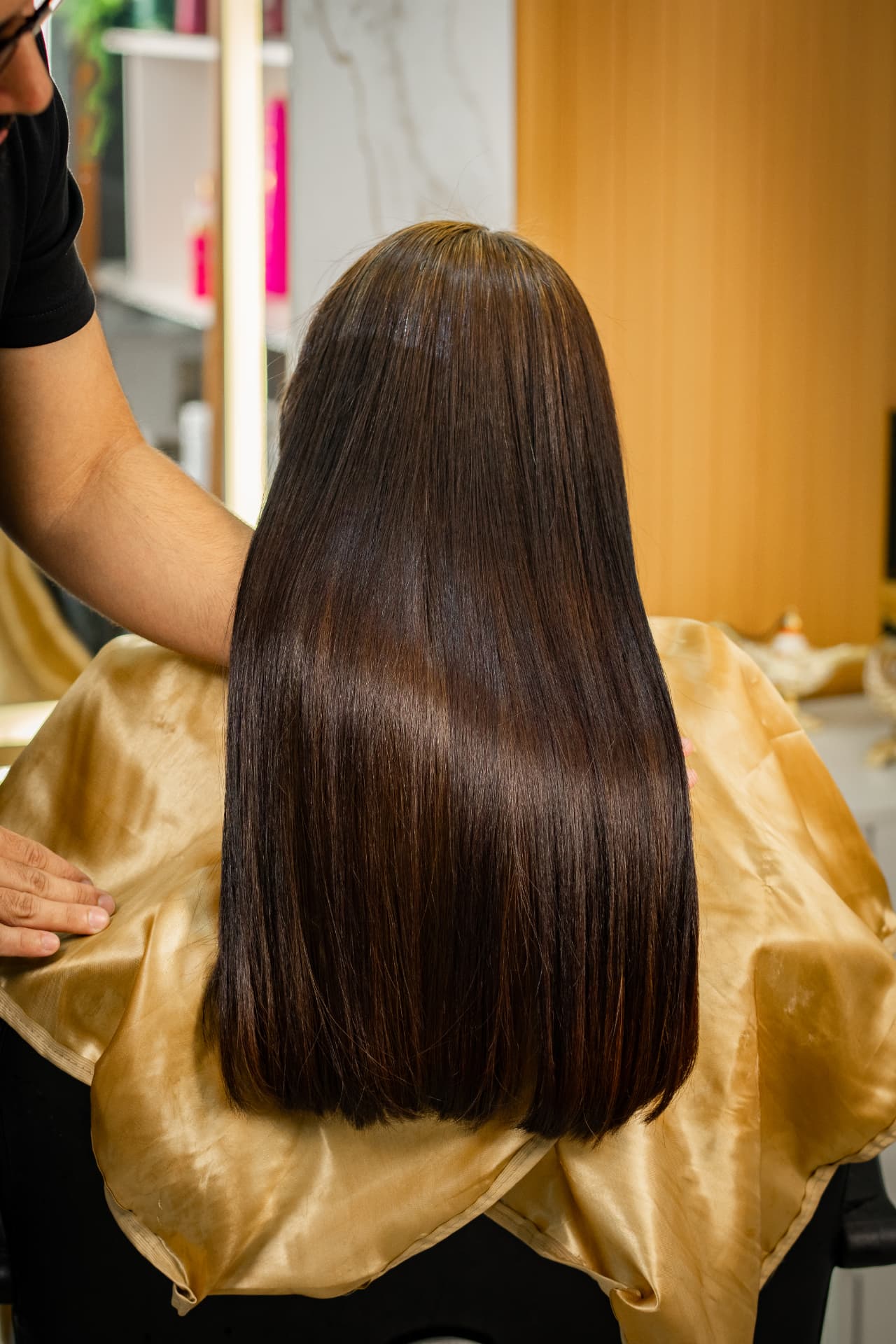

How Long Nanoplastia Lasts and the Aftercare That Protects It
Nanoplastia lasts three to six months depending on technique and home care. The aftercare protocol, the products that shorten it, and the maintenance calendar that keeps clients rebooking.
Vitta Gold Academy · September 4, 2026 · 7 min read
Key takeaways
- Nanoplastia lasts three to six months, depending on the technique used and on home care.
- The first 72 hours and the choice of shampoo decide which end of that range the client lands on.
- A written aftercare card plus a booked return visit is the difference between a one-off service and an annual client.
How long does Nanoplastia last? Between three and six months. Nanoplastia acts in the cortex and the cuticle, so the result grows out gradually rather than dropping off suddenly. Where a client lands inside that window depends on the technique used in the chair and on the home care that follows.
What shortens the result
- Sulphate and salt-heavy shampoos, which strip the sealed cuticle faster.
- Chlorine and sea water without a protective rinse.
- Aggressive daily heat with no thermal protection.
- Frequent colour or bleach on top of the smoothed length. When colour is needed, it comes after the Nanoplastia and after a safety interval — and a colour-protected, toning formula (Violet Acid, as in Nanoplex Arginina™) plus ammonia-free toners keep blonde and coloured hair stable for longer.
- Under-processing or incomplete thermal sealing in the original service — the most common cause blamed on the client.
The home-care protocol worth writing down
- 1Sulphate-free, salt-free shampoo and a matching conditioner.
- 2A weekly nourishing mask that maintains the protein and moisture balance.
- 3Heat protection whenever a dryer or iron is used.
- 4A protective rinse before and after pool or sea exposure.
- 5A silk or satin pillowcase to reduce friction overnight.
The maintenance calendar
| Moment | What happens |
|---|---|
| Day 3 | Message: first wash instructions and the home-care routine |
| Week 4 | Check-in: how the hair is behaving, retail top-up |
| Month 3 | Assessment: pattern returning at the root? Book the next service |
| Months 3–6 | Full or partial reapplication, depending on regrowth and target finish |
Partial reapplication versus a full service
When the length still holds the finish and only the regrowth has reverted, treat the new growth and refresh the length lightly instead of processing everything again. It protects the hair, protects your time, and keeps the client on a cycle instead of a whim.
Duration and the chosen finish
A 100% straight, mirror-smooth result and a softer anti-frizz result do not fade at the same speed — a fuller straightening is more visible as it grows out, while an anti-frizz finish blends. Set the expectation at the consultation, together with the finish the client chose: 100% straight, natural movement, anti-frizz or curl definition.
Sources
- American Academy of Dermatology — Healthy hair care and heat-styling guidance
- Hair Cosmetics: An Overview — International Journal of Trichology (NIH/PMC) — Hair structure, cosmetic chemistry and how treatments act on the fibre
Free for professionals
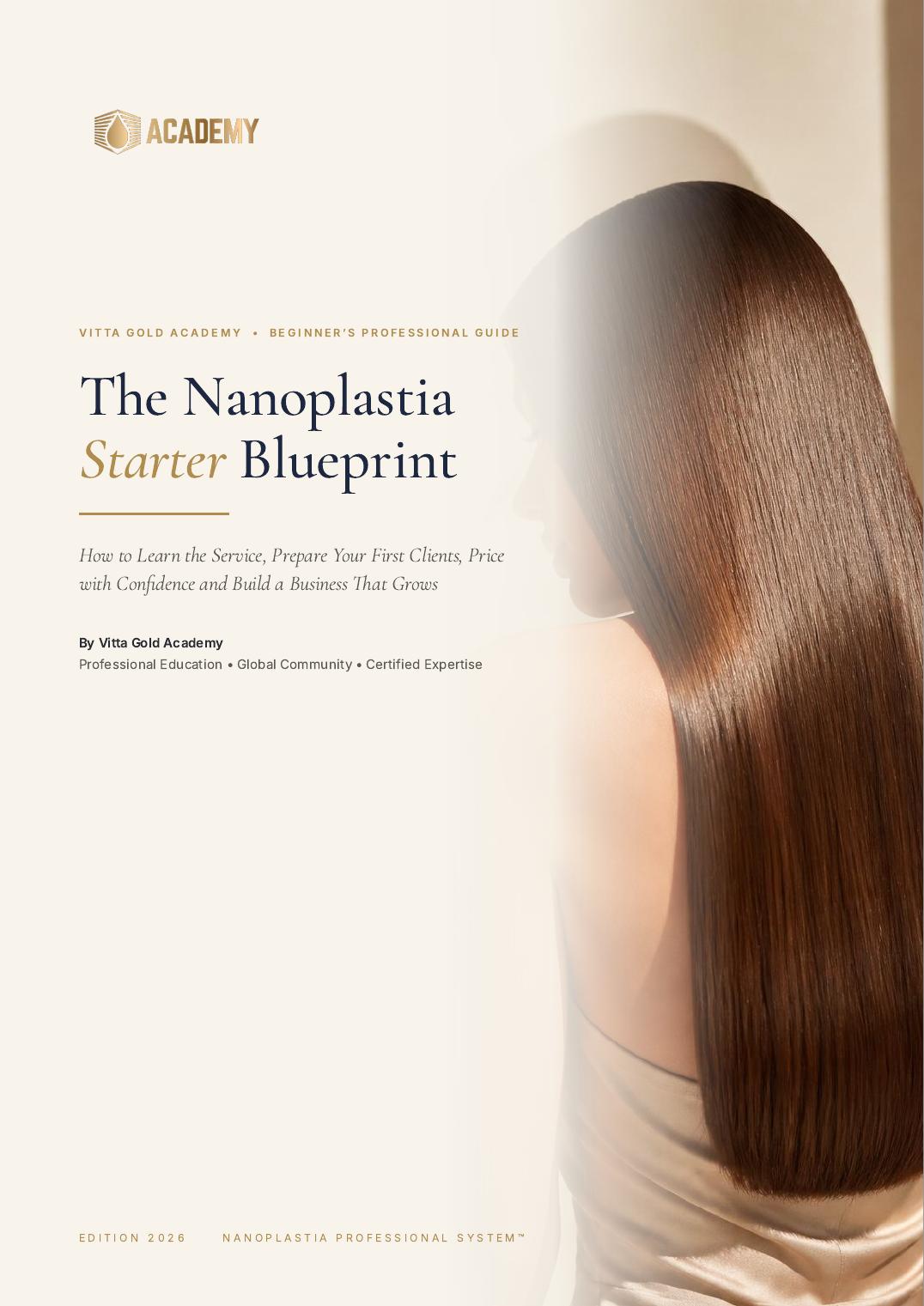
The Nanoplastia Starter Blueprint
The 20-page beginner guide: the six-move roadmap, the starter kit, the six-stage professional system, the pricing framework and a 21-day plan to launch the service in your salon.
Download the blueprintFrequently asked questions
How long does Nanoplastia last?
Three to six months. The result acts in the cortex and cuticle and grows out gradually. Technique and home care — sulphate-free washing, heat protection, avoiding chlorine — decide where inside that window a client lands.
When can a client wash her hair after Nanoplastia?
Follow the interval in your protocol, typically within the first 72 hours. During that window the hair should also stay loose, with no ties, clips or tucking behind the ears.
Which shampoo should be used after Nanoplastia?
A sulphate-free, salt-free shampoo with a matching conditioner, plus a weekly mask. Sulphates and salt strip the sealed cuticle and shorten the result noticeably.