
Nanoplastia Price List: What to Charge per Hair Length in 2026
A professional price structure for Nanoplastia: ranges per hair length and density, product cost per application, chair time, add-ons and how to raise prices without losing clients.
Vitta Gold Academy · September 17, 2026 · 6 min read

Key takeaways
- Typical Nanoplastia prices run from $250 to $600, set by hair length and density.
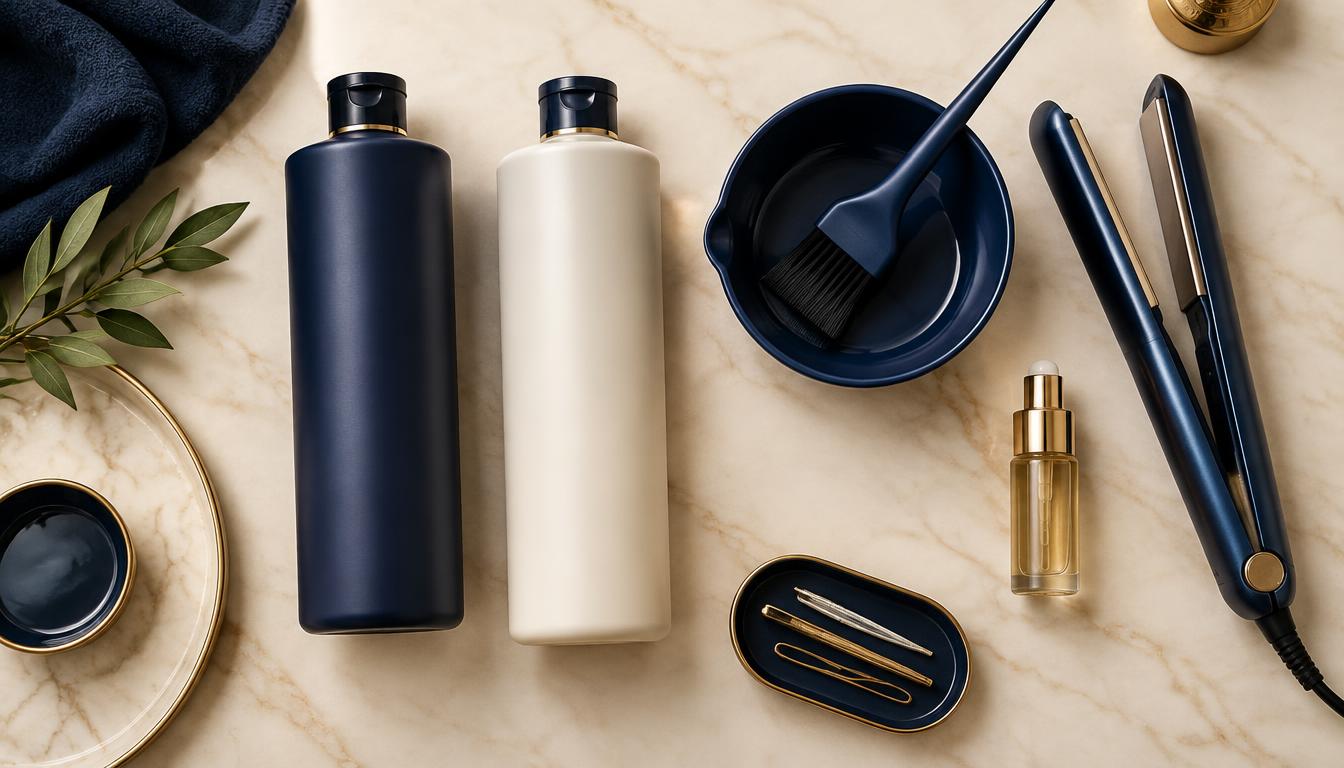
- A 1L professional bottle covers around ten full-head applications; chair time is the real cost.
- Homecare and a booked maintenance visit at 3 to 6 months raise the ticket without discounting the service.
What should you charge for Nanoplastia? Most salons price between $250 and $600 per service, set by hair length and density rather than one flat number. The product is the small part of the cost — a 1L professional bottle covers around ten full-head applications. What you are really selling is two to three hours of chair time and the diagnosis that makes the result last 3 to 6 months.
A price structure that works
| Service | Price range | Chair time |
|---|---|---|
| Nanoplastia — short / bob | $250–$320 | About 2 hours |
| Nanoplastia — shoulder length | $320–$420 | 2–2.5 hours |
| Nanoplastia — long | $420–$520 | 2.5–3 hours |
| Nanoplastia — long and dense, or coily | $520–$600 | 3 hours or more |
| Homecare duo (shampoo + conditioner) | Retail add-on | Sold at the chair |
Build the price from your hour, then sanity-check it
- 1Take your target hourly revenue for the chair.
- 2Multiply by the realistic appointment length for that hair length.
- 3Add product and consumables for one application.
- 4Compare with the ranges above; if you are far below, you are subsidising the client.
- 5Round up, never down — a smoothing service priced too low reads as a risk, not a bargain.
What the service costs you
- About one tenth of a 1L bottle per full head, plus pre-treatment shampoo and after-treatment conditioner.
- Consumables: gloves, bowl and brush, cape, towels.
- Chair time — the dominant cost, and the one most price lists ignore.
- Redo risk, which correct diagnosis and a strand test push close to zero.
How to raise your prices
Raise with proof and notice. Photograph your own before-and-after work on hair like your clients', announce the new prices four to six weeks ahead, and honour existing bookings. Stylists who show their own results and state their training hold higher prices with lower resistance than those who compete on discounts.
Does certification pay for itself?
The Nanoplastia Professional System™ is $99 USD and includes 9 video lessons, 3 bonus guides, a digital Vitta Gold Academy certificate, lifetime access, one year of the Vitta Gold Experts partner program and a 7-day money-back guarantee. At the price ranges above, it is recovered on the first full-price service.
Free for professionals
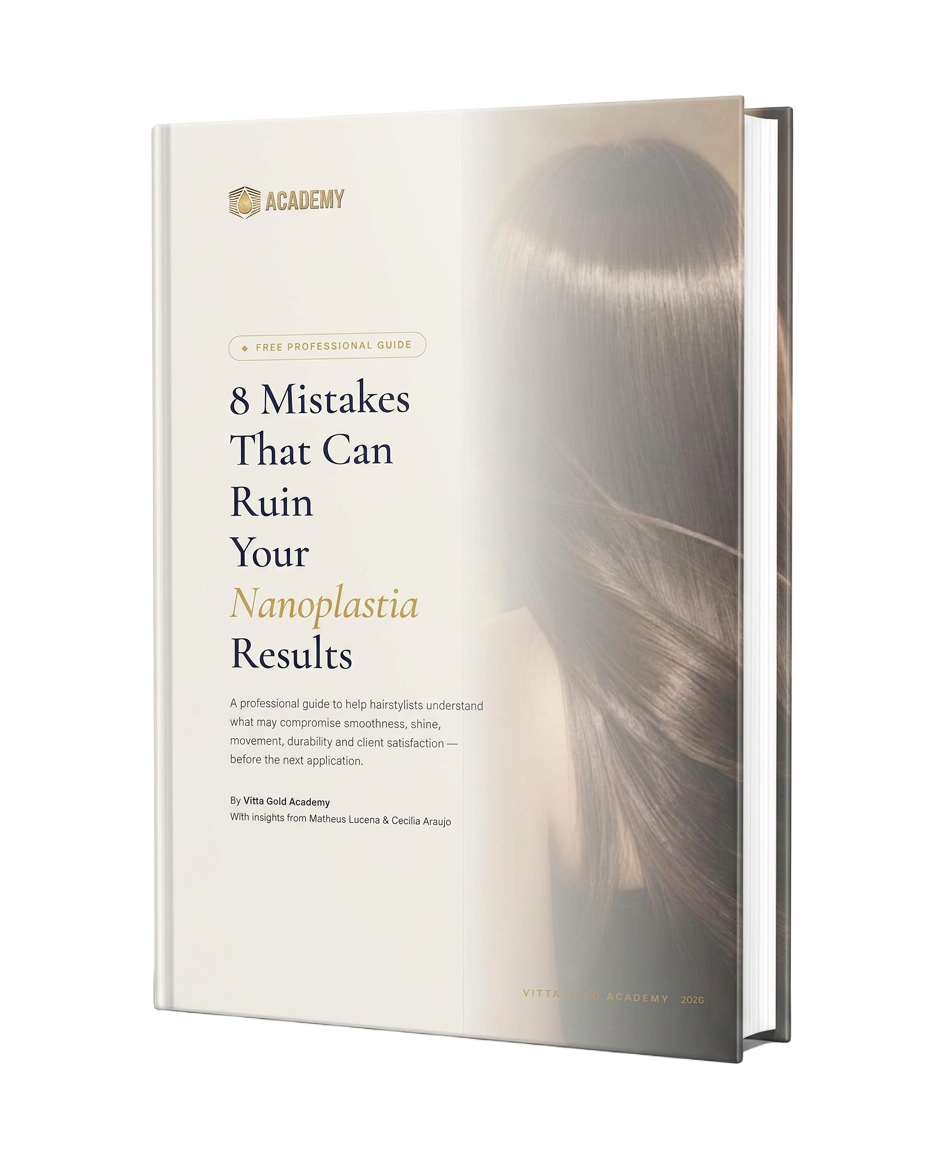
8 Mistakes That Can Ruin Your Nanoplastia Results
The technical and commercial errors behind most failed services — skipped diagnosis, thick sectioning, improvised heat, weak aftercare and pricing that destroys your hourly rate — with the checklist to prevent each one.
Download the free guideFrequently asked questions
How much should I charge for Nanoplastia?
Most salons charge $250 to $600 per service, set by hair length and density. Build the price from your target hourly revenue multiplied by a two to three hour appointment, then add product and consumables.
How much does Nanoplastia cost the salon per application?
About one tenth of a 1L professional bottle per full head, plus pre-treatment shampoo, after-treatment conditioner and consumables. Chair time is the larger cost.
How often should a Nanoplastia client rebook?
Every 3 to 6 months, depending on hair type, homecare and regrowth. Book the maintenance visit while the client is still in the chair.
Should I discount Nanoplastia to attract new clients?
Add value instead — include homecare or a finishing service. Discounting a smoothing service signals risk and makes the next price increase harder.