
Nanoplastia Before and After: What Clients Can Expect
What a Nanoplastia before and after really looks like: the finishes available, what changes on day one, how long results last and how to document them.
Vitta Gold Academy · October 3, 2026 · 8 min read
Key takeaways
- Nanoplastia reaches 100% straight on any hair type, and the finish is adjustable to anti-frizz or curl definition instead.
- Shine, softness and frizz control are visible the same day the service is performed.
- The result lasts 3 to 6 months with sulfate-free home care, regardless of starting hair type.
- Processing time is 40 to 60 minutes, plus washing, drying and thermal sealing.
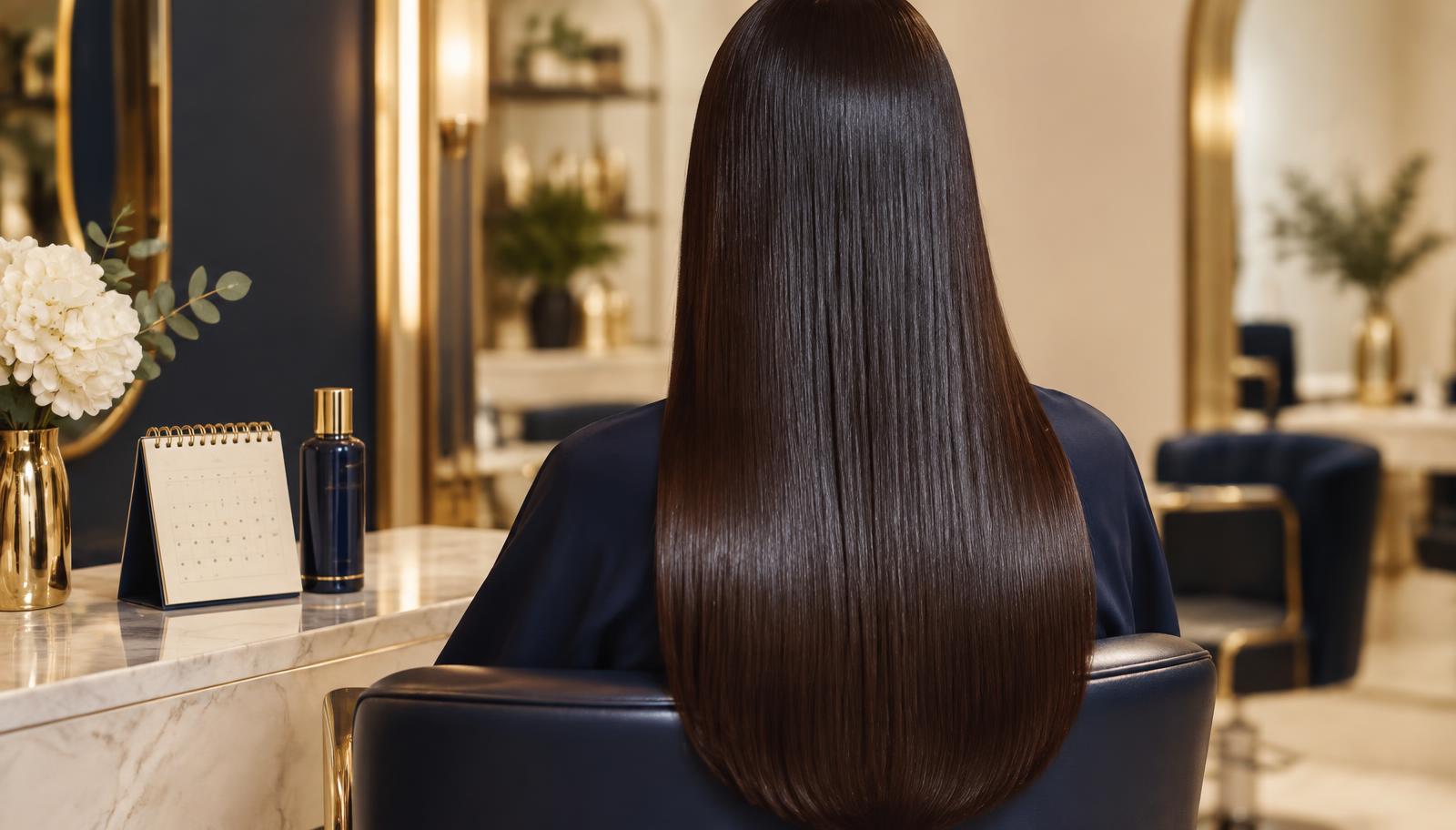
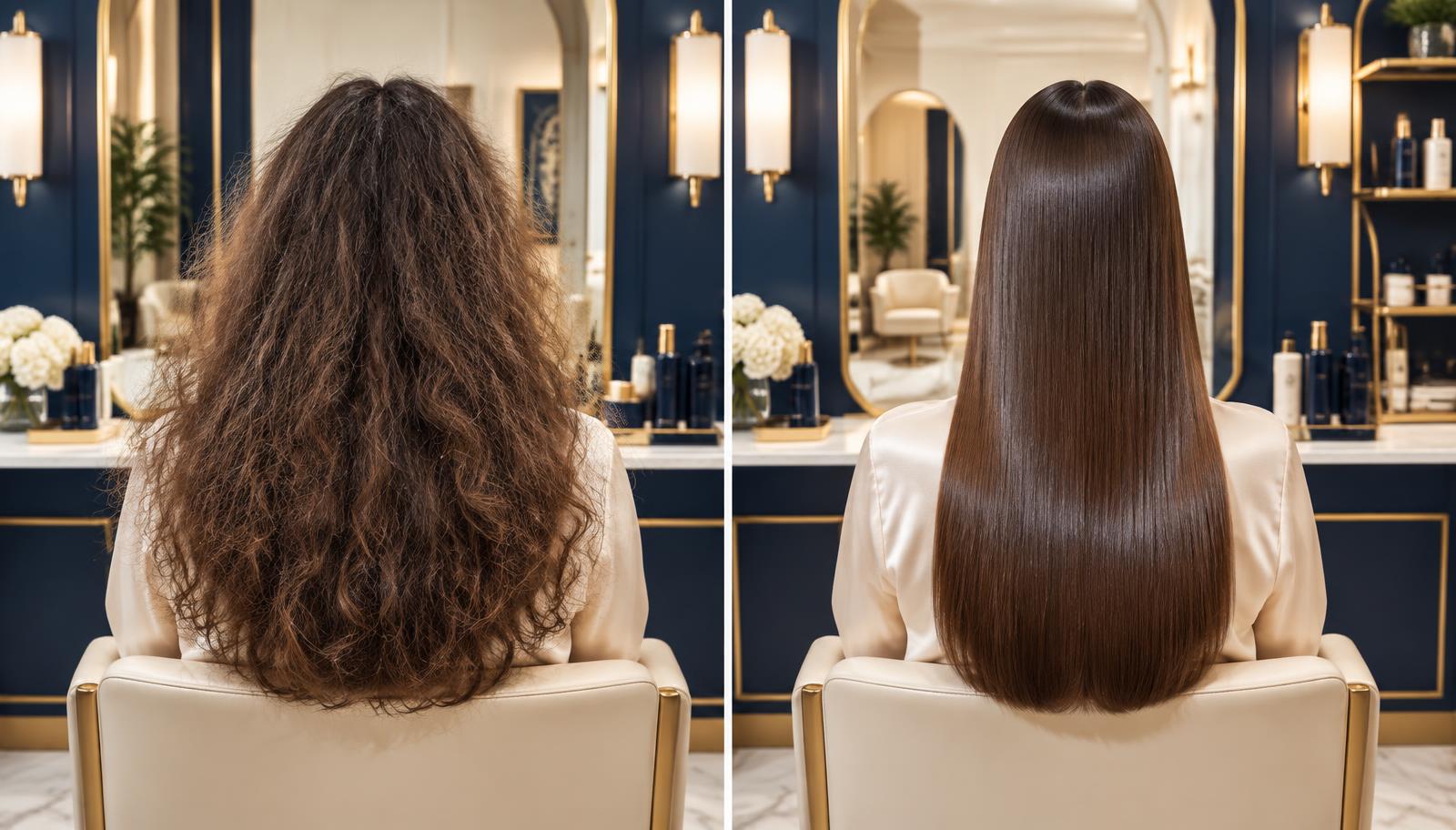
What does a Nanoplastia before and after look like? Frizz and volume go in, and hair leaves the chair straight, soft and shiny. The professional decides the finish: 100% straight, a natural anti-frizz result or defined curls. The change is visible the same day and lasts 3 to 6 months, because the active works inside both the cortex and the cuticle rather than sitting on the surface.
Before-and-after photography is also one of the most effective tools a salon has for converting new clients, but it only works if stylists and clients both understand what is actually changing and why, rather than treating the 'after' as a mysterious transformation. Setting that expectation correctly at consultation is what makes the after photo match what the client actually wanted.
Which finish can the client choose?
| Finish | What the client sees | How it is achieved |
|---|---|---|
| 100% straight | Mirror-straight, maximum shine | Full 40–60 minute processing time, full thermal sealing passes |
| Natural anti-frizz | Movement kept, frizz gone | Adjusted processing and fewer thermal passes |
| Curl definition | Defined curls, less volume, frizz controlled | Adjusted dwell time and sealing without straightening tension |
What changes on day one?
- Frizz under control, even in humidity, because the cuticle has been sealed rather than just smoothed over.
- Softer hair and a mirror-like shine, visible as soon as the hair is dry and styled.
- Much faster blow-dry at home, since the realigned cortex and sealed cuticle hold their shape with far less heat styling.
- Tone preserved on coloured and blonde hair, when the system used includes colour-protection technology.
This tone-preservation point matters most on coloured and bleached hair, where the finish is only part of the story.
See real salon results, filmed in the chair, on the products page.
Why the before-photo matters as much as the after
A before photo taken on freshly blow-dried, brushed-smooth hair hides the actual frizz and texture the service is correcting, and makes the after photo look like a smaller change than it is. Photograph the hair in its natural, untouched state — the same state the client arrives in — so the comparison is honest and the transformation reads clearly.
How do you photograph a before and after?
- 1Same spot, same light, same angle, from behind and from the side.
- 2Before photo on dry hair, without brushing it smooth or applying any product.
- 3After photo once the hair is fully finished and dry, styled the way the client would normally wear it.
- 4Ask the client's permission before posting, and confirm which platforms she is comfortable being shown on.
How long does the before-and-after result actually last?
Between 3 and 6 months, across every hair type and every chosen finish, provided home care matches the recommended routine. Regrowth at the root is normal and expected within that window; it is not a sign the treatment has failed, and it is the natural cue to book the next appointment.
Setting expectations so the after photo matches the result
The biggest source of disappointment in before-and-after comparisons is not a failed service — it is a mismatch between what the client expected and the finish that was actually agreed. Confirming the target finish in writing before the service starts, and reviewing it again before the thermal sealing stage, keeps the final photo aligned with what was promised.
Does the before-and-after differ by hair type?
No. Nanoplastia reaches 100% straight on any hair type — fine, coarse, wavy or tightly curled — because the active works inside both the cortex and the cuticle rather than depending on the fibre's natural shape to cooperate. What changes between hair types is not the achievable finish but the sectioning strategy and the number of thermal sealing passes needed to lock it in evenly across the head.
- Fine or fragile hair: smaller sections and a lighter thermal pass count, since the cuticle seals quickly but can be damaged by excess heat.
- Coarse or very resistant hair: more thermal passes and closer attention to full product saturation, since a thicker cuticle takes longer to seal.
- Curly or coily hair: the same 100% straight result is achievable, or the stylist can dial the finish back to curl definition if that is what the client actually wants.
- Coloured or bleached hair: the same timeline applies, but a colour-protection-aware system protects tone through the thermal sealing stage.
What should the before-and-after record actually show?
A useful before-and-after is a diagnostic record, not just a marketing asset. Alongside the photos, note the starting porosity and condition, the finish agreed with the client, the processing time used and the thermal sealing passes applied. That record is what lets a stylist explain, months later, exactly why one client's result lasted five months and another's three — and it is far more informative than the photo alone.
Can the before-and-after result be touched up between appointments?
Light regrowth at the root within the 3-to-6-month window is expected and does not need a correction service. What it does need is sulfate-free shampoo and the conditioning routine recommended at the appointment, since harsh surfactants are the main reason a result fades earlier than the realistic window. A full touch-up only makes sense once the client is ready for the next complete service.
How does the finish choice affect the after-photo timeline?
A 100% straight finish photographs its full result the moment the hair is dry and styled flat, because every strand has been realigned and sealed in the same direction. A natural anti-frizz finish or curl definition finish, by contrast, often looks its best once the client has washed and air-dried or diffused the hair once or twice at home, since that first wash settles the movement the stylist intentionally left in. Photographing a non-straight finish on day one, before that settling happens, can make the after look less finished than it actually is — worth explaining to the client before she judges the mirror on the way out.
How do processing time and finish relate to each other?
Processing time sits inside the same 40-to-60-minute window regardless of which finish is chosen, because that window is what the active needs to penetrate the cortex and begin reorganising the internal bonds. What changes with the finish is what happens after that dwell time: a 100% straight result calls for the full set of thermal sealing passes with maximum tension, an anti-frizz finish uses fewer passes and less tension, and curl definition skips flat-iron tension altogether in favour of a sealing method that locks the existing curl pattern instead of erasing it.
What causes an uneven before-and-after result?
- Sectioning too thick, which leaves the active unable to reach every strand evenly, so some sections finish smoother than others.
- Skipping the strand test on previously coloured or chemically treated hair, which can produce an unpredictable result in just those zones.
- Inconsistent thermal sealing passes across the head, often from rushing the back sections where visibility is harder.
- A home-care routine with sulfates or heavy oils applied too soon, which can soften the seal unevenly before it has fully stabilised.
Does regrowth change the before-and-after comparison?
Regrowth shows up as new, untreated hair at the root, which naturally has its original texture while the rest of the length keeps the finish from the service. This is not a flaw in the original result — it is simply new hair that has not been treated yet, and it is the clearest, most reliable signal that it is time to rebook, typically somewhere in that 3-to-6-month window. Clients who understand this in advance read regrowth as a maintenance reminder rather than a disappointment with the service.
Should every client get a before-and-after photo?
Not necessarily, and that is fine. Some clients are glad to be photographed for the salon's portfolio; others would rather skip it, and both preferences deserve to be respected without pressure. What matters for the service itself is the diagnostic habit behind the photo — noting starting condition, agreed finish and processing details — which is worth keeping in the client record even when no photo is taken, since it protects both the stylist and the client if a follow-up conversation is needed later.
How does Nanoplastia compare with other smoothing before-and-afters?
Clients researching online will see before-and-after results labelled keratin treatment, hair botox, progressive brush and Nanoplastia, often side by side, and assume they are looking at interchangeable options. They are closer relatives than strangers: all of them work by temporarily reorganising the internal structure of the hair fibre, and the differences between them come down to the specific smoothing active used, the raw material quality and the protocol a given brand or stylist follows. What sets a well-executed Nanoplastia before-and-after apart is not a different mechanism but the combination of cortex-and-cuticle action, the adjustable finish and the realistic 3-to-6-month window backed by a documented protocol rather than a one-size-fits-all application.
Sources
- Hair Cosmetics: An Overview — International Journal of Trichology (NIH/PMC) — Hair structure, cosmetic chemistry and how treatments act on the fibre
- American Academy of Dermatology — Healthy hair care and heat-styling guidance
Free for professionals
8 Mistakes That Can Ruin Your Nanoplastia Results
The technical and commercial errors behind most failed services — skipped diagnosis, thick sectioning, improvised heat, weak aftercare and pricing that destroys your hourly rate — with the checklist to prevent each one.
Download the free guideFrequently asked questions
Does Nanoplastia make hair completely straight?
It can. Nanoplastia reaches 100% straight on any hair type, and the finish can also be adjusted to a natural anti-frizz result or defined curls.
Is the result visible immediately?
Yes. Smoothness, shine and frizz control are visible at the end of the service, as soon as the hair is dry and styled.
How long does the after last?
Between 3 and 6 months, depending on hair type, the finish chosen and home care.
How long does the service take?
The product stays on the hair for 40 to 60 minutes, plus washing, drying and thermal sealing.
Why doesn't my after photo match the finish I expected?
This is usually a consultation mismatch rather than a service issue — confirm the target finish (100% straight, anti-frizz or curl definition) in writing before the service, not after.
Does the before-and-after result differ by hair type?
The mechanism and timeline are the same for every hair type. What differs is sectioning and thermal sealing technique, not the achievable finish or how long it lasts.
What should I record alongside the before-and-after photos?
Starting porosity and condition, the finish agreed with the client, the processing time used and the number of thermal sealing passes — this record explains result differences between clients far better than the photo alone.