
Keratin Treatment for Curly Hair: 100% Straight or Defined Curls
Keratin treatment for curly hair, explained for stylists: how to reach 100% straight or keep defined curls, 4C diagnosis, before-and-after expectations and aftercare.
Vitta Gold Academy · October 14, 2026 · 9 min read
Key takeaways
- A keratin treatment for curly hair can take the fiber to 100% straight, to a natural anti-frizz finish, or to defined, frizz-free curls — the finish is a consultation decision, not a limit of the service.
- Formaldehyde-free systems such as Nanoplastia reach 100% straight on any curl pattern, including 4C hair, when processing time and thermal sealing are done fully.
- Keratin does not ruin curls; rushed processing, incomplete sealing and the wrong finish choice do.
- Expect results to last 3 to 6 months, with sulfate-free home care extending the upper end of that range.
- Colour comes after smoothing, never in the same appointment as bleach or lightening.
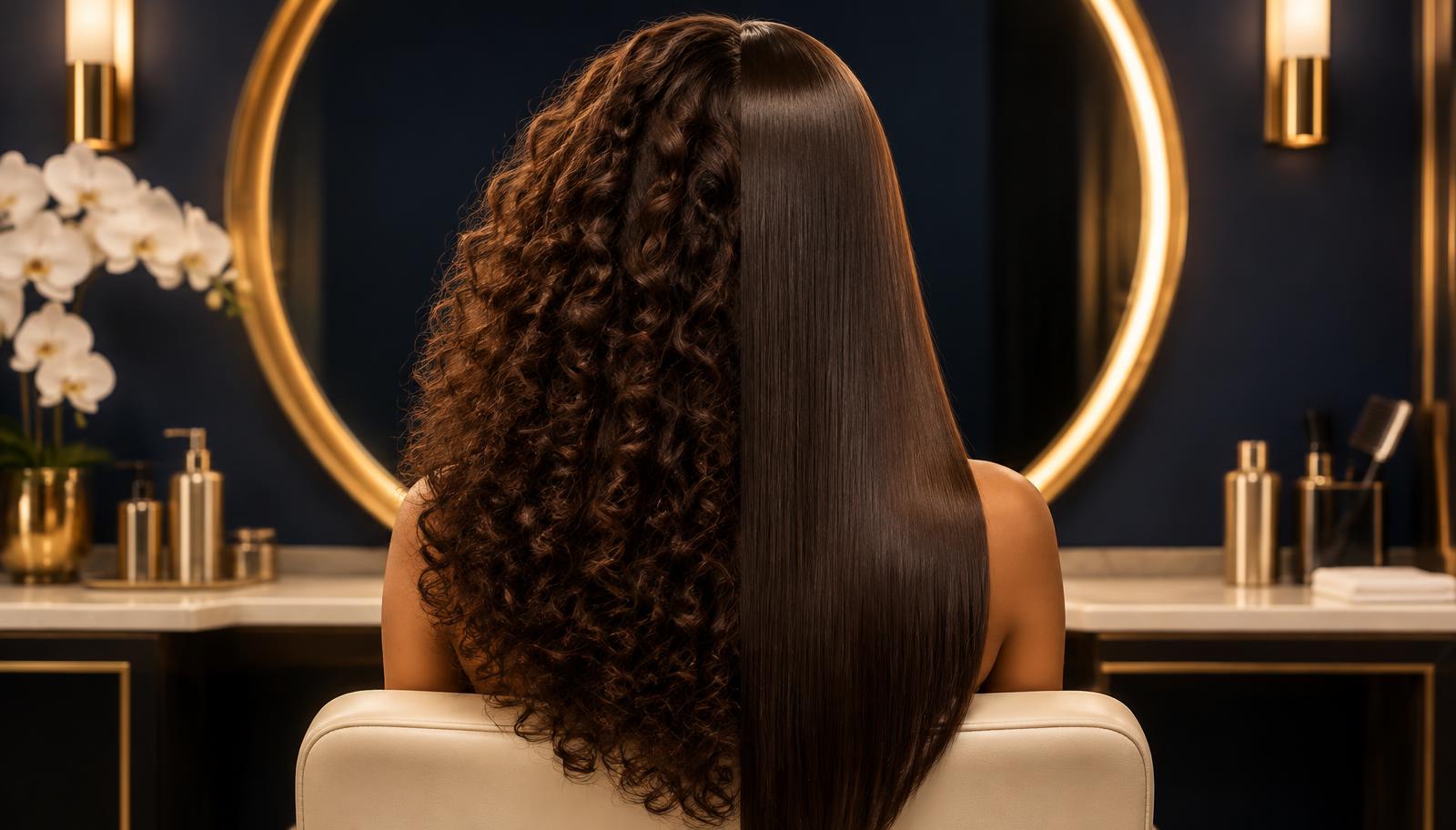
Can you do a keratin treatment for curly hair? Yes. A formaldehyde-free keratin-family treatment such as Nanoplastia can take curly hair to a 100% straight finish, to a natural anti-frizz result that keeps movement, or to defined, frizz-free curls — including on 4C hair. The outcome is decided in the consultation and delivered through processing time and thermal sealing, and it typically lasts 3 to 6 months.
Keratin, protein, botox, Brazilian blowout and Nanoplastia are commercial names for one family of services: chemical hair smoothing. A Nanoplastia performed with hydrolysed keratin is also a keratin treatment; a Nanoplastia performed with hydrolysed proteins is also a protein treatment. What really separates one service from another is the smoothing active and the quality of the raw materials, not the word printed on the bottle.
What does a keratin treatment actually do to curly hair?
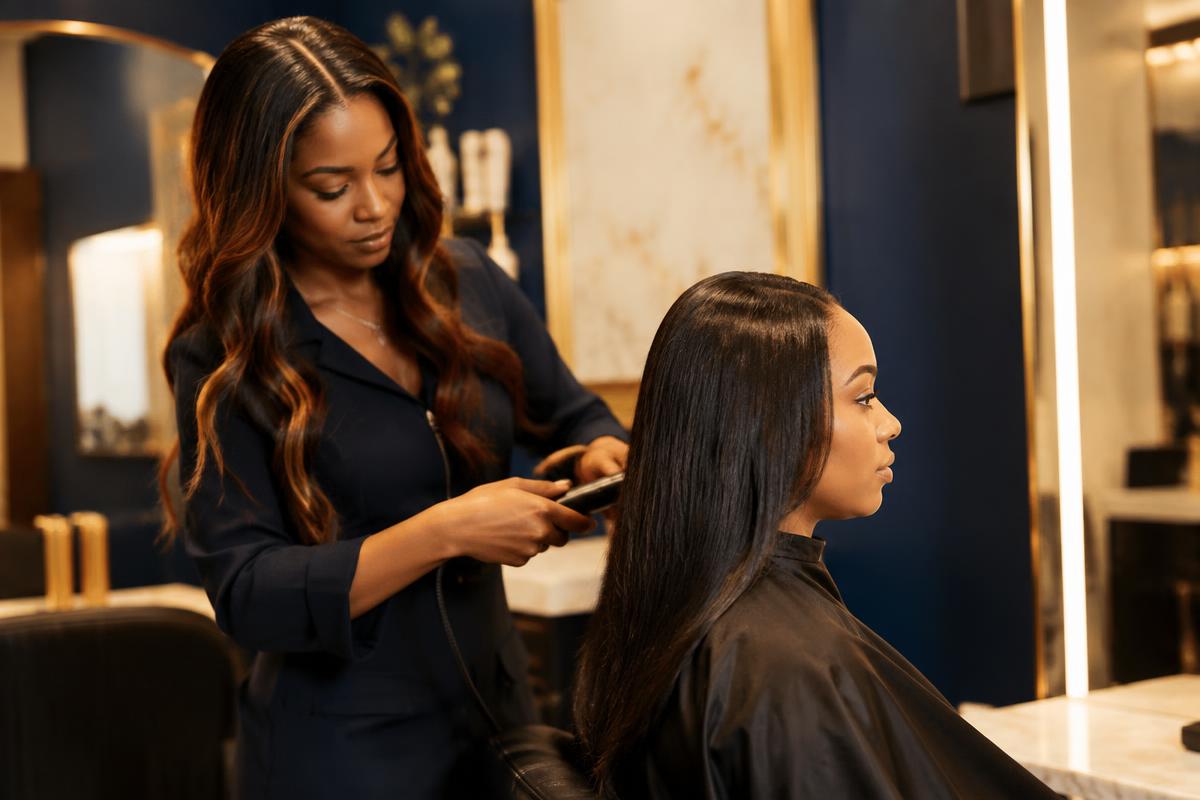
It reorganizes the fiber from the inside, not just the surface. A professional keratin-family active penetrates the cortex and reorganizes the cuticle; heat from a flat iron then seals that new shape in place. On curly and coily hair, the same mechanism works — the difference is only how far you push the sealing step, because that choice is what decides whether the client leaves 100% straight or with smoother, defined curls.
Does keratin ruin curls?
No, a correctly performed service does not ruin curls — an incorrectly performed one does. The curl pattern is "lost" permanently only when a stylist defaults to full straightening without asking the client what she wants, or when processing time is cut short and the fiber is left in an unstable in-between state that looks frizzy rather than curly or straight. Plan the finish before the first section is parted, and the curl pattern stays exactly where the client chose it to be.
I tell every curly client the same thing before I open the bottle: we are choosing a finish today, not just removing frizz. Once she picks straight, natural, or defined, the whole service — timing, sealing, even the iron temperature — follows that decision.
Three finishes you can deliver from one protocol
| Client wants | Finish to deliver | Key technical step |
|---|---|---|
| Completely straight, no wave at all | 100% straight | Full 40–60 minute processing and complete thermal sealing, pass by pass |
| Less volume, hair still moves | Natural anti-frizz | Full processing, lighter sealing that leaves some natural movement |
| Curls kept, frizz gone | Curl definition | Adjusted technique and reduced sealing; the curl is organized, not flattened |
This is the same decision tree we walk through in our guide to Nanoplastia on curly hair, including how to set client expectations in the consultation.
Keratin treatment for 4C hair: what changes?
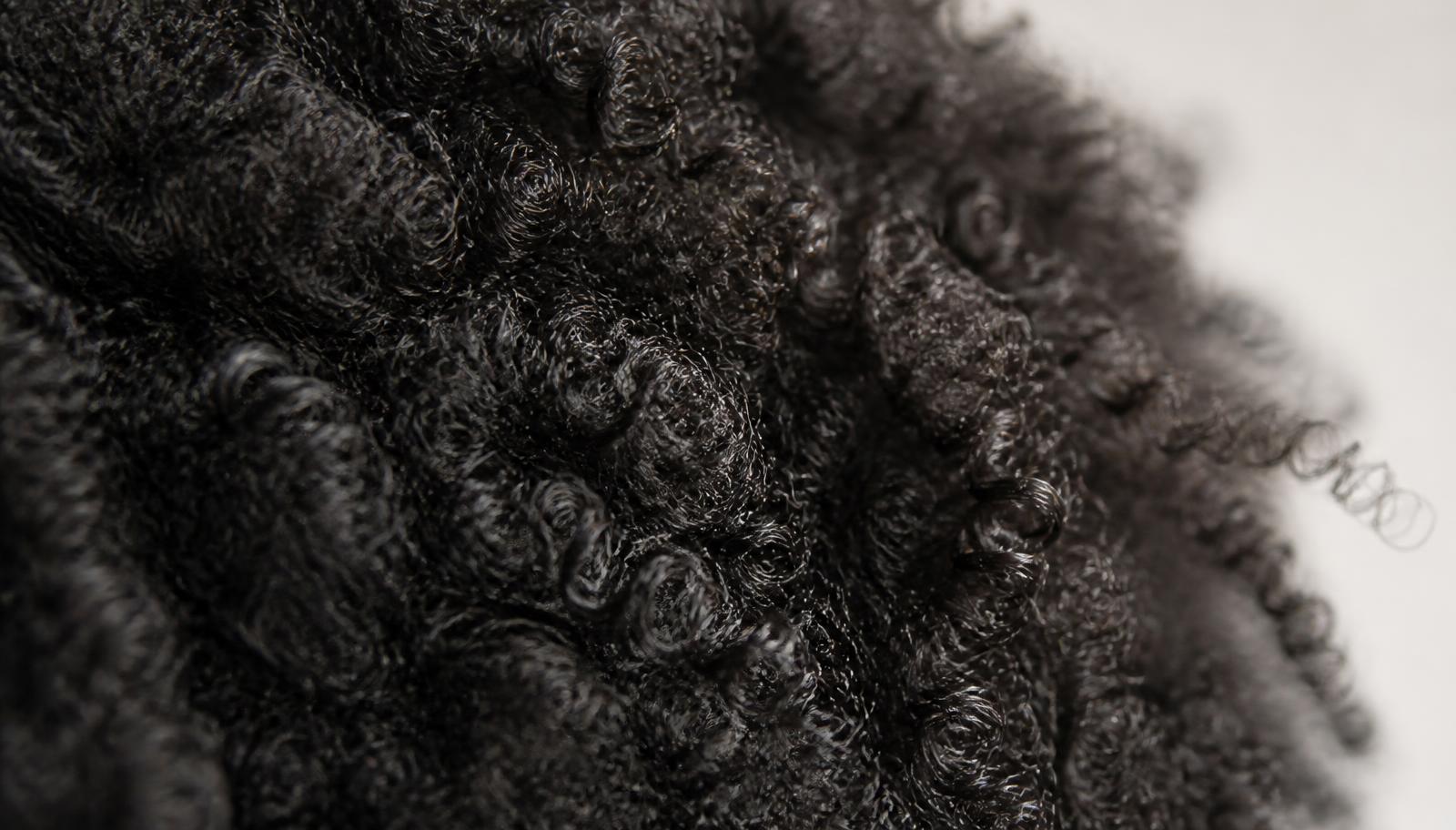
On 4C hair the mechanism does not change, but the diagnosis and the technique do. 4C strands have a tighter curl radius, more cuticle layers per inch, and often more mechanical damage from daily manipulation, so saturation has to be even and deliberate and sealing passes are usually slower and more numerous to reach every curl consistently. Done this way, a formaldehyde-free keratin treatment reaches 100% straight on 4C hair exactly as it does on any other texture — texture changes the technique, not the ceiling of the result.
For coily and afro textures specifically, including sectioning and timing adjustments, see our dedicated protocol guide.
Keratin treatment on curly hair before and after: what to expect
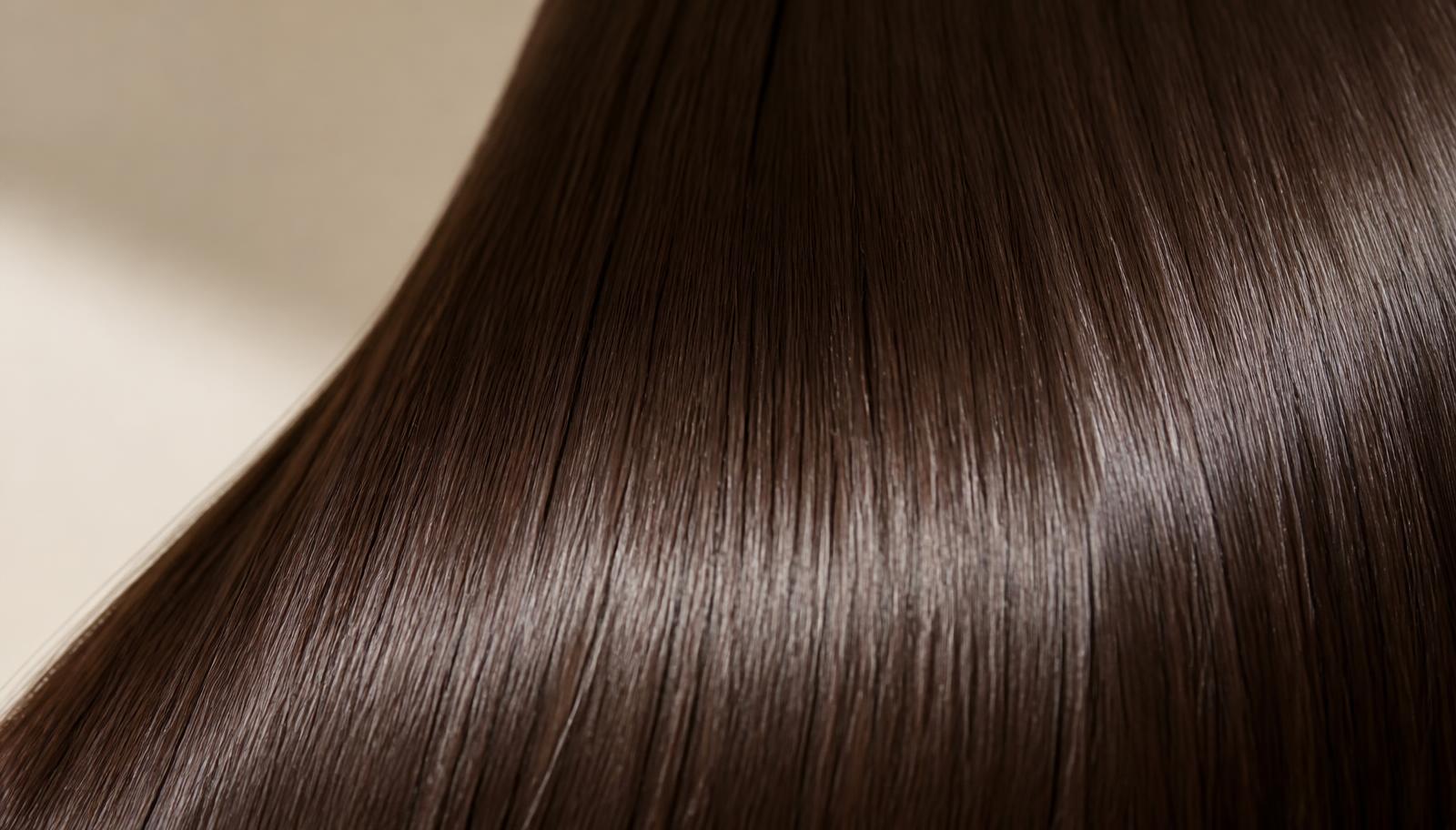
Before the service, curly and coily hair usually shows shrinkage, frizz at the mid-lengths and ends, and uneven shine because the cuticle scatters light unevenly. Immediately after a full-straightening service, the hair falls completely flat with a glassy shine; after a curl-definition service, the same hair keeps its curl pattern but the strands separate cleanly, frizz is gone, and the curls read noticeably longer and glossier than before. Photograph both in the same light and angle at every appointment — it is the fastest way to show a prospective curly client exactly what a consultation decision produces.
Diagnosis before you touch a curly client's hair
- Check porosity and elasticity section by section — curly hair is frequently more porous at the mid-lengths and ends than at the root.
- Take a full chemical history: relaxers, previous keratin or Nanoplastia services, box dye, bleach.
- Agree the finish with a photo reference before you mix anything, and write it on the client's record.
- Run a strand test on any previously bleached or colour-treated section before committing the full head.
- Never schedule bleach or lightening in the same appointment as smoothing — smooth first, color after a safety interval.
Best smoothing treatment for curly hair: how to choose
The best smoothing treatment for curly hair is the one that lets you choose the finish rather than forcing one. Avoid systems that only straighten or that are marketed as "curl-safe" but cannot reach 100% straight when a client asks for it — both extremes limit your menu. A formaldehyde-free keratin-family system that works in the cortex and the cuticle and can be sealed lightly or fully gives you one product line for every curly client who walks in, instead of stocking separate products for separate promises.
Aftercare that protects the result on curly hair
- 1Wait the full 48–72 hours before the first wash so the new bonds finish setting.
- 2Switch the client to a sulfate-free shampoo and conditioner for home use — this is the default home-care instruction, not an occasional clarifying wash.
- 3Recommend a weekly leave-in or mask for curl definition finishes, since curly hair loses moisture faster between washes.
- 4Protect with heat protectant before any home styling with hot tools.
- 5Book the touch-up visit before the client leaves, in the 3-to-6-month window.
For the full week-by-week routine, send clients to our aftercare and maintenance guide.
Sources
- American Academy of Dermatology — Curly and coily hair care guidance from board-certified dermatologists
- U.S. Food and Drug Administration — Hair smoothing products that release formaldehyde when heated
Free for professionals
8 Mistakes That Can Ruin Your Nanoplastia Results
The technical and commercial errors behind most failed services — skipped diagnosis, thick sectioning, improvised heat, weak aftercare and pricing that destroys your hourly rate — with the checklist to prevent each one.
Download the free guideFrequently asked questions
Will a keratin treatment ruin my client's curls?
Not if the finish is planned in the consultation. The same keratin-family protocol can deliver full straightening, a natural anti-frizz result, or curl definition — curls are only lost when a stylist defaults to full straightening or rushes processing.
Can curly hair become 100% straight with a keratin treatment?
Yes. A formaldehyde-free Nanoplastia reaches 100% straight on any curl pattern, including 4C hair, with full 40–60 minute processing and complete thermal sealing.
Does keratin ruin curls permanently?
No single service permanently damages the curl pattern on its own. Curls return as the treated hair grows out and is cut away over the following months, within the normal 3-to-6-month lifespan of the service.
What is the best smoothing treatment for curly hair?
One that lets you choose the finish rather than forcing it — a formaldehyde-free keratin-family system that works in the cortex and cuticle and can be sealed lightly for curl definition or fully for 100% straight results.
Is a keratin treatment safe for 4C hair?
Yes, with correct diagnosis, even saturation, and full processing time. 4C hair needs more deliberate sectioning and sealing passes, but the service works the same way and reaches the same 100% straight ceiling when a client wants it.
How long does a keratin treatment last on curly hair?
Typically 3 to 6 months, the same range as on straight hair, depending on technique, hair density and sulfate-free home care.
Can I color my client's hair before or after a keratin treatment?
After. Smooth first, then color or bleach following a safety interval — never bleach and smooth in the same appointment.
Should curly clients use a clarifying shampoo after their keratin treatment?
Not as a default. Sulfate-free shampoo and conditioner are the standard home-care recommendation; a clarifying wash is a diagnostic decision for a specific build-up issue, not a routine step.