
How Long Does a Keratin Treatment Last? A Stylist's Full Answer
How long does a keratin treatment last? Usually 3 to 6 months. See what shortens or extends it, aftercare rules, wash timing and when to rebook clients.
Vitta Gold Academy · October 14, 2026 · 9 min read
Key takeaways
- A professional keratin-family treatment typically lasts 3 to 6 months, fading gradually rather than washing out overnight.
- Processing time and thermal sealing in the chair matter more to longevity than any single home-care product.
- Sulfate-free aftercare is the default home-care instruction for extending the result, not an occasional clarifying wash.
- Clients can usually repeat the service every 3 to 6 months once the previous treatment has fully grown out or faded.
- Book the touch-up before the client leaves the chair, not when she calls asking why her hair feels different.
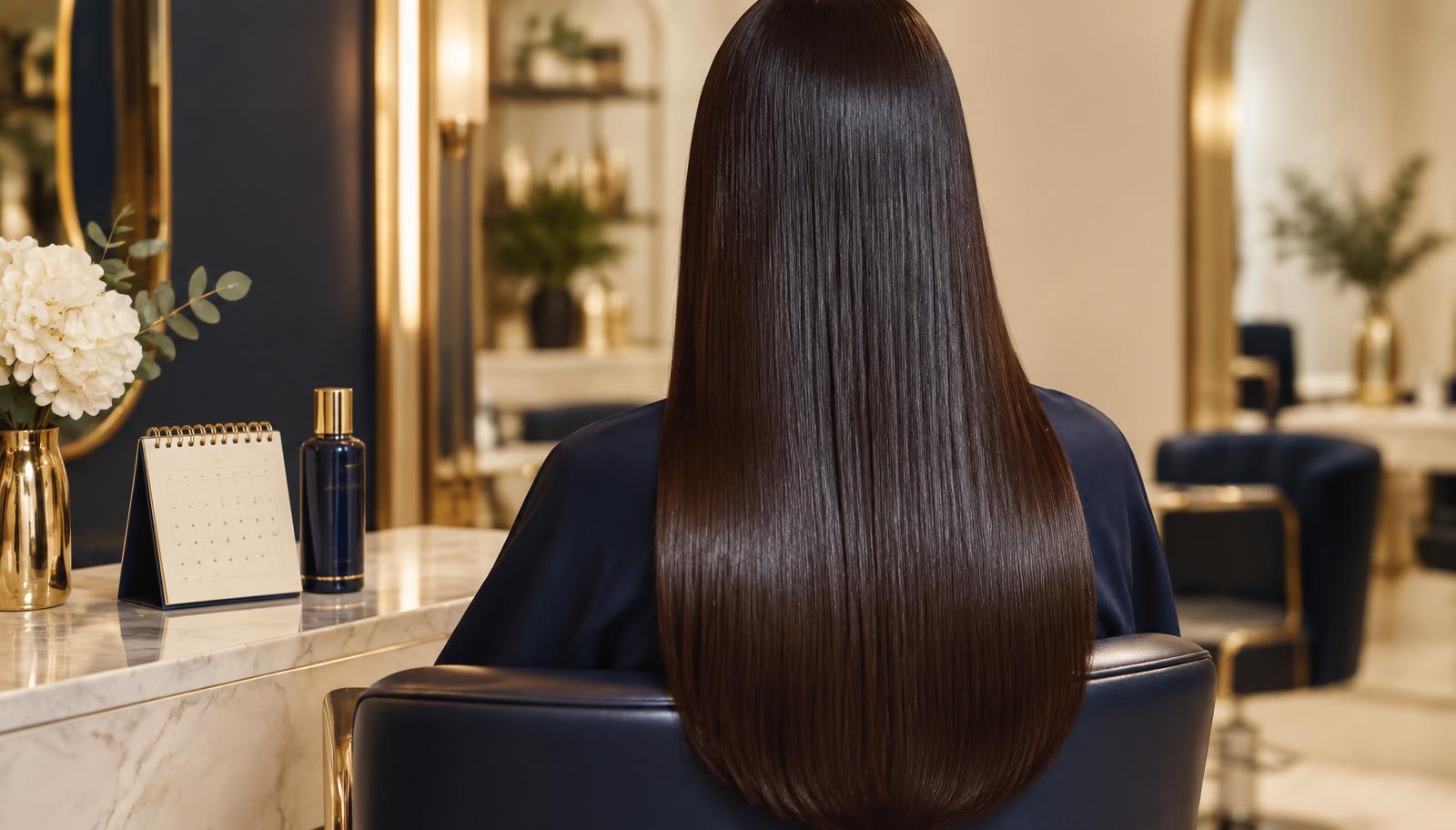
How long does a keratin treatment last? A professional keratin-family treatment usually lasts 3 to 6 months. It acts in both the cortex and the cuticle, so it fades gradually as hair grows out and is washed, rather than disappearing all at once. Where a client lands in that range depends on technique in the chair and home care at the sink.
Keratin, protein, botox, Brazilian blowout and Nanoplastia are commercial names for one family of services: chemical hair smoothing. A Nanoplastia performed with hydrolysed keratin is also a keratin treatment; one performed with hydrolysed proteins is also a protein treatment. The real difference between services is the smoothing active and the quality of the raw materials.
Why does a keratin treatment wear off at all?
Because hair grows and sheds. The treated portion of the strand keeps its new alignment, but new growth emerges untreated at the root, and the oldest treated hair is gradually cut away or reaches the ends. What clients perceive as a keratin treatment "wearing off" is really two things happening together: regrowth creating a visible line of demarcation, and the treated cuticle slowly losing some of its seal through repeated washing, heat and friction.
What shortens it, and what extends it
| Shortens the result | Extends the result |
|---|---|
| Cutting processing time short | Full 40–60 minute processing, every time |
| Incomplete thermal sealing | Precise, pass-by-pass thermal sealing |
| Sulfate shampoos at home | Sulfate-free shampoo and conditioner at home |
| Washing within the first 48–72 hours | Waiting the full recommended time before the first wash |
| Chlorine and salt water without protection | Rinsing and protecting hair before pools or the ocean |
| No rebooking plan | Touch-up booked at checkout, inside the 3–6 month window |
Can you wash hair after a keratin treatment?
Yes, but not immediately. Most formaldehyde-free keratin-family treatments need 48 to 72 hours before the first wash so the realigned bonds finish setting; washing, clipping hair back with an elastic, or even tucking it behind the ears too soon can leave a crease or dent in that window. After the waiting period, normal washing resumes — the instruction that matters long-term is switching to sulfate-free products, not avoiding water altogether.
What does a full keratin treatment aftercare routine look like?
- 1Days 0–3: no washing, no clips, no tucking hair behind the ears, no ponytails or buns.
- 2First wash: sulfate-free shampoo and conditioner, lukewarm water, no scrubbing at the scalp with nails.
- 3Weekly: a nourishing mask or leave-in to replace moisture lost between washes.
- 4Ongoing: heat protectant before any hot tool use, and a lower iron or dryer temperature than the client used before the service.
- 5Occasional: sun protection or a UV-filtering spray for clients with high sun exposure, since UV accelerates fading of any smoothing service.
Send clients home with the full written routine from our aftercare and maintenance guide so they are not guessing by week three.
How often can you get a keratin treatment?
Most clients can safely repeat a formaldehyde-free keratin-family treatment every 3 to 6 months, once the previous service has largely grown out or faded. Booking much sooner than that, before the hair has had a chance to show regrowth, adds processing on already-treated hair and raises the risk of over-processing rather than improving the result. Clients who want to stay consistently smooth should book their next appointment at the far end of that window, not the near end.
How does processing time in the chair affect how long it lasts?
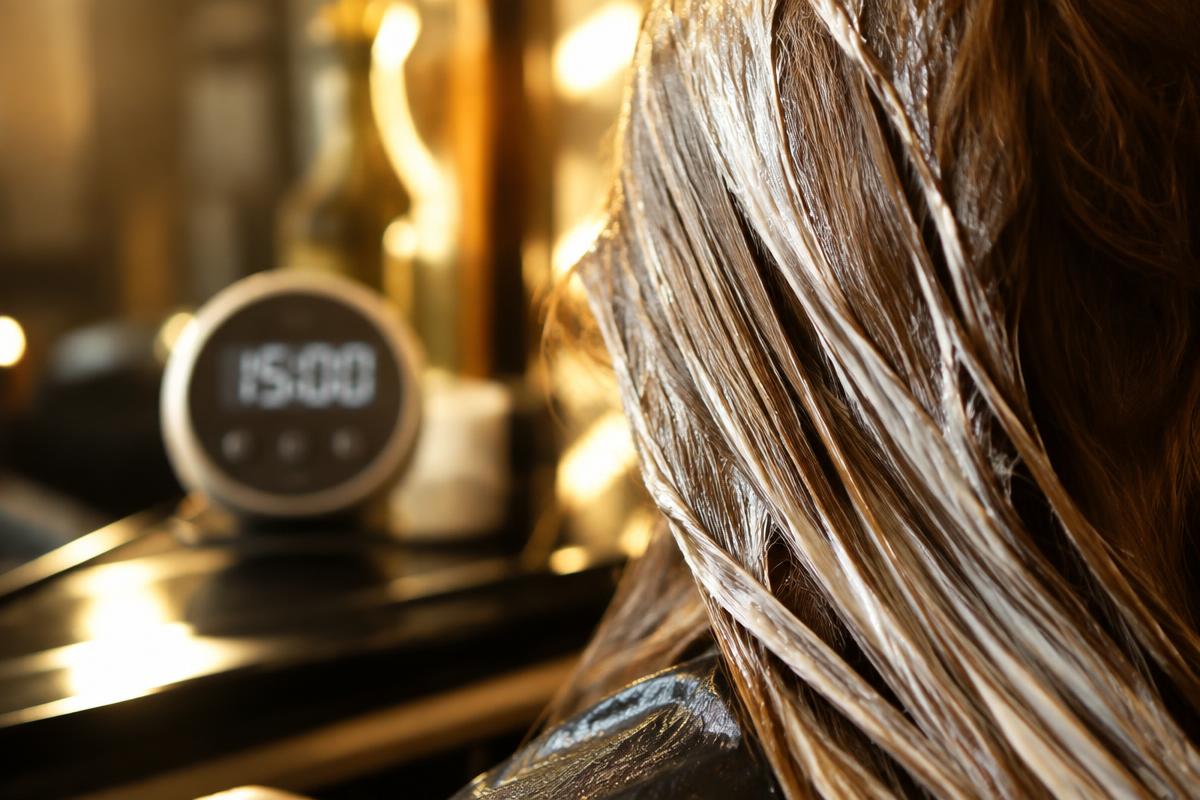
Full processing time is non-negotiable for a full lifespan. A formaldehyde-free keratin-family active needs 40 to 60 minutes of contact time to fully penetrate the cortex and reorganize the cuticle — cutting that short to save 15 minutes on a busy day does not just weaken the initial result, it shortens how long the whole service holds, often by a month or more. The same applies to thermal sealing: every section needs the correct number of flat-iron passes at the right temperature, not a quick pass over visibly frizzy pieces.
How does hair type change the timeline?
| Hair type / finish | Typical duration | Why |
|---|---|---|
| Fine, straight or wavy hair, full straightening | 4–6 months | Lower natural volume and curl tension to fight |
| Curly hair, 100% straight finish | 3–5 months | More natural curl tension works against the seal over time |
| Coily or 4C hair, 100% straight finish | 3–4 months | Fastest natural regrowth visibility and highest curl tension |
| Any hair type, curl-definition finish | 3–6 months | Less sealing applied, so fading is less visually obvious |
When a client calls at month two asking if her keratin treatment is 'wearing off,' the first thing I check is her shampoo bottle, not her hair. Most of the time the answer is sitting on her bathroom shelf.
Signs a keratin treatment is wearing off, and what to do
- Visible line of demarcation at the root where untreated regrowth begins — normal, and a sign it is almost rebooking time.
- Return of frizz at the mid-lengths before the roots — often a home-care issue, address products first.
- Hair feels rougher to the touch overall — usually time for the full touch-up rather than a quick fix.
- Color looks duller than right after the service — confirm whether the client switched shampoos before assuming the treatment itself faded.
If color has shifted alongside the smoothing fading, remember the order of operations: the treatment should always have gone on before color, never the same day as bleach or lightening.
Sources
- U.S. Food and Drug Administration — Hair smoothing products that release formaldehyde when heated
- Cleveland Clinic — What keratin treatments do to the hair and how long they typically last
Free for professionals
8 Mistakes That Can Ruin Your Nanoplastia Results
The technical and commercial errors behind most failed services — skipped diagnosis, thick sectioning, improvised heat, weak aftercare and pricing that destroys your hourly rate — with the checklist to prevent each one.
Download the free guideFrequently asked questions
How long does a keratin treatment last?
Usually 3 to 6 months, depending on hair type, processing technique in the chair and home care at the sink.
Can you wash your hair after a keratin treatment?
Yes, after waiting 48 to 72 hours for the new bonds to fully set. After that, switch to sulfate-free shampoo and conditioner.
How often can you get a keratin treatment?
Most clients can safely repeat the service every 3 to 6 months, once the previous treatment has largely grown out.
What keratin treatment aftercare extends the result the longest?
Sulfate-free shampoo and conditioner, waiting the full time before the first wash, heat protectant, and avoiding unprotected chlorine or salt water exposure.
Why is my keratin treatment wearing off faster than expected?
The most common causes are shortened processing time or incomplete sealing in the chair, and sulfate shampoos or frequent clarifying washes at home.
Does a keratin treatment wear off all at once?
No. It fades gradually as treated hair grows out and is cut away, and as repeated washing and heat slowly loosen the seal.
Should I use a clarifying shampoo to make my keratin treatment last longer?
No, not as a routine step. Sulfate-free shampoo and conditioner are the standard home-care recommendation; a clarifying wash is reserved for a specific build-up issue.
Does a keratin treatment last the same on colored hair?
Yes, provided the order of services was correct: smoothing first, then color after a safety interval, never both in the same appointment.