
Nanoplastia at Home vs in the Salon: What Actually Differs
Why Nanoplastia is a professional service: diagnosis, strand testing, ventilation and controlled thermal sealing — how to answer clients who ask about DIY kits.
Vitta Gold Academy · September 4, 2026 · 9 min read
Key takeaways
- Nanoplastia is a professional chemical service: diagnosis, strand testing and controlled thermal sealing decide the outcome.
- The finish is adjustable — 100% straight, natural anti-frizz or curl definition — and that control is exactly what a home kit cannot offer.
- Processing time is 40 to 60 minutes and the active works in both the cortex and the cuticle, which is why technique matters as much as the product.
- Answer the DIY question with education, not fear; it is one of the highest-converting consultations you will have.
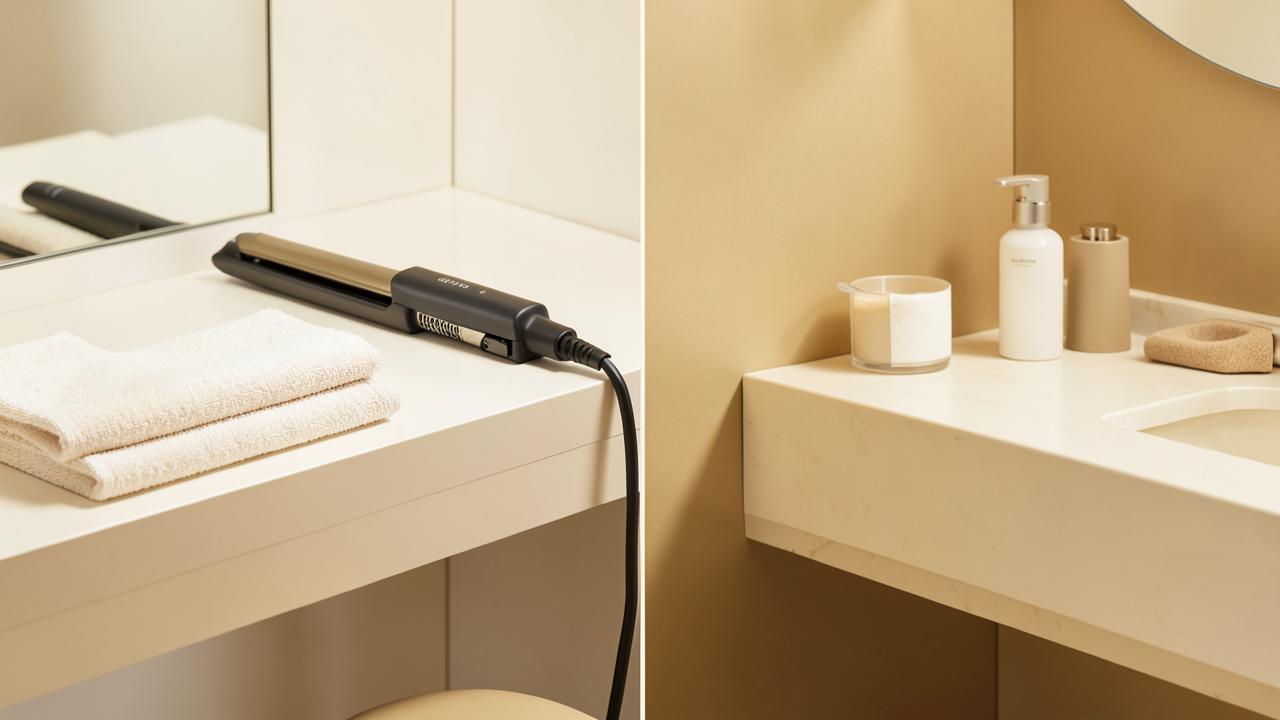
Can Nanoplastia be done at home? Technically the product can be applied anywhere, but the result cannot be controlled anywhere. Nanoplastia is a chemical smoothing service whose outcome depends on diagnosis, a strand test, correct processing time and complete thermal sealing — four things a home user has no reliable way to judge, and no way to correct if they go wrong.
Clients ask this question for a reasonable reason: the product itself is not exclusive to a salon, and DIY kits marketed as 'keratin treatments' are widely available online. The honest professional answer is not that the product is somehow locked away from consumers — it is that the result depends entirely on decisions a trained stylist makes before, during and after application.
The four differences that matter
| Factor | Salon | At home |
|---|---|---|
| Diagnosis | Porosity, elasticity and chemical history assessed per zone | Guessed from how the hair looks |
| Strand test | Standard before any resistant or treated hair | Almost never done |
| Thermal sealing | Controlled temperature, tension and passes | Whatever the domestic iron does |
| Correction | Professional can rescue an unexpected reaction | No recovery path |
Environment and safety
A salon has ventilation, protective equipment and a professional who knows the active in the bottle. Smoothing actives differ enormously — formaldehyde-free actives such as glyoxylic acid and amino acid blends sit on one side, formaldehyde and its releasers on the other — and their handling requirements differ accordingly. A bathroom with the door closed is not a place to work with any of them.
Processing time is also harder to control at home than it looks. The 40 to 60 minute window exists because the active needs that time to penetrate the cortex and reorganise the fibre; a home user with no timer discipline, a distracted household and no reference point for 'how long is too long' is far more likely to over- or under-process the hair than a stylist running a timed protocol.
What goes wrong most often with DIY attempts
- Uneven application that leaves some strands untreated while others are over-saturated, producing a patchy result.
- Incorrect flat-iron temperature for the hair's actual condition, since a home user has no porosity or elasticity diagnosis to work from.
- Skipping or shortening processing time out of uncertainty, which produces a result that fades within weeks instead of lasting months.
- No ventilation or protective setup, which is a real exposure concern regardless of which smoothing active the product contains.
How to answer the question in consultation
- 1Acknowledge the question instead of dismissing it — the client is asking about value, not attacking you.
- 2Explain the four control points above in plain language.
- 3Show your own before-and-after work on hair like hers.
- 4Offer the finish choice out loud; it makes the service feel bespoke, because it is.
- 5Book the appointment there and then, with the maintenance visit in three to six months.
Showing your own before-and-after documentation from past clients makes this conversation concrete rather than theoretical.
Why the salon result also lasts longer
A correctly diagnosed, fully processed and properly sealed Nanoplastia service lasts 3 to 6 months. DIY attempts rarely reach that range, not because the product is different, but because under-processing and inconsistent thermal sealing are the norm when there is no diagnosis behind the application. Longevity is a direct result of technique, not a feature that is switched on by being in a salon chair.
About the names on the box
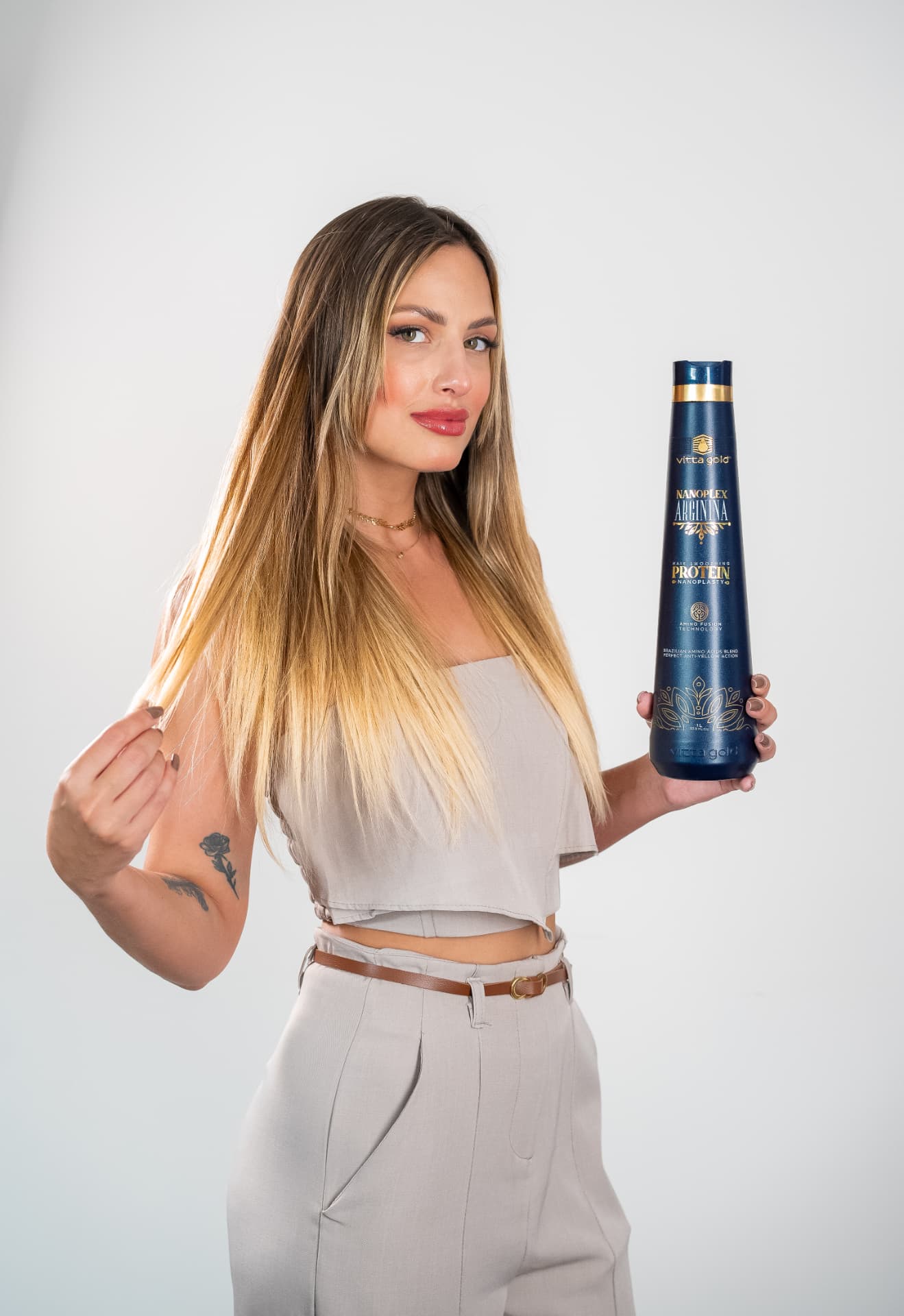
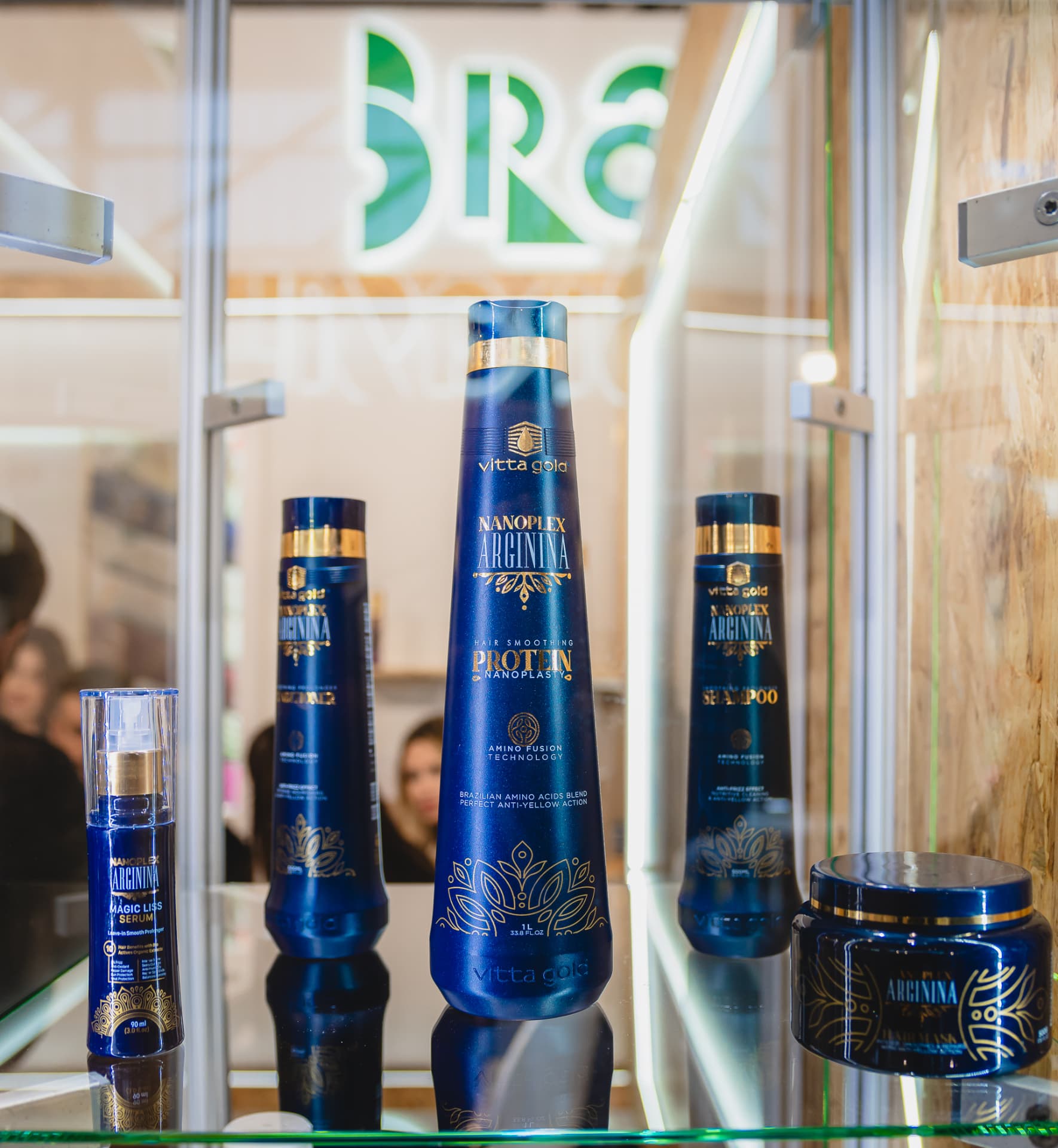
Keratin treatment, protein treatment, hair botox and Nanoplastia are commercial names inside the same family of chemical hair smoothing. A Nanoplastia containing hydrolysed keratin can be described as a keratin treatment; one built on hydrolysed proteins as a protein treatment. What separates services is the quality of the raw materials and the smoothing active. Nanoplex Arginina™ Amino Fusion combines amino-acid keratin, hydrolysed proteins and Nanoplastia technology.
Why doesn't a strand test exist for DIY kits?
A strand test exists to catch a reaction — over-processing, an unexpected result on previously treated hair, or a product that is simply wrong for that fibre — before it happens on the whole head. It takes a few minutes and requires the ability to compare the test strand against a trained reference point, which is exactly the step a home application skips, usually without realising what it is skipping.
What does a home kit actually cost a client in the long run?
| Stage | Salon service | DIY kit |
|---|---|---|
| Before application | Porosity and elasticity diagnosis, strand test | No diagnosis, no strand test |
| During application | Timed 40–60 minute processing, full saturation checked | Guessed timing, uneven saturation |
| Thermal sealing | Controlled temperature and tension, multiple passes | Domestic iron, inconsistent passes |
| If something goes wrong | Professional can intervene and adjust | No recovery path |
| Realistic result lifespan | 3 to 6 months | Often weeks, fading unevenly |
Can a client combine a home touch-up with a salon service?
Between appointments, the only safe at-home step is following the recommended sulfate-free routine — it is not a substitute for the chemical service itself, and layering a separate DIY smoothing product on top of a salon result risks uneven processing on hair that has already been chemically treated. Any touch-up to the root regrowth should be the next scheduled professional service, not a home application in between.
Does the finish choice make the at-home vs salon gap bigger?
Yes, in practice. A 100% straight finish depends on consistent tension and full thermal sealing across every section, which is difficult to replicate with a domestic iron and no mirror angle on the back of the head. Anti-frizz and curl-definition finishes are, if anything, even harder to attempt safely at home, because they require the stylist to judge how much tension to withhold section by section — a calibrated decision, not a fixed setting a home user can simply copy from a video.
What does a professional diagnosis actually check?
| What is assessed | Why it matters for the result |
|---|---|
| Porosity | Determines how fast the active penetrates the cortex and how much processing time is appropriate |
| Elasticity | Flags hair at risk of breakage before any heat is applied |
| Chemical history | Identifies previous colour or relaxer treatments that change how the hair reacts |
| Scalp condition | Confirms the service can proceed without irritation risk |
What if a client has already tried a DIY kit before coming in?
This is a common starting point, not a dead end. The first step is the same diagnosis used with any new client — checking porosity, elasticity and how the hair responds to a strand test — since a previous DIY application may have left the cortex unevenly treated even if the surface looks fine. Once that diagnosis is complete, a correctly timed and fully sealed Nanoplastia service can still be carried out; it simply starts from a slightly less predictable baseline than virgin hair.
Is there a middle ground between a full DIY kit and a full salon visit?
Not really, and it helps to be direct about that with clients who ask. The parts of the service that actually determine the outcome — diagnosis, strand test, timed processing and controlled thermal sealing — are not separable from the application itself, so there is no safe reduced version of the service that a client can do half at home and half in the chair. The genuine middle ground is the aftercare routine between appointments: a sulfate-free shampoo and the recommended conditioning routine, which protect the result without attempting to replicate the chemical service.
Why does this question keep coming up even among loyal clients?
Loyal clients ask about DIY kits for the same reason anyone questions a recurring cost: they have seen an advertisement, a friend's recommendation or a social media video claiming a similar result at a fraction of the price, and they are checking whether they are missing an easier option. Treating the question as routine rather than as a loyalty test keeps the conversation collaborative, and it is also an opportunity to reinforce exactly what the appointment includes — something many clients have never had explained to them in plain terms before.
Sources
- U.S. Occupational Safety and Health Administration — Occupational safety guidance for hair salons and smoothing services
- U.S. Food and Drug Administration — Hair smoothing products that release formaldehyde when heated
- American Academy of Dermatology — Healthy hair care and heat-styling guidance
Free for professionals
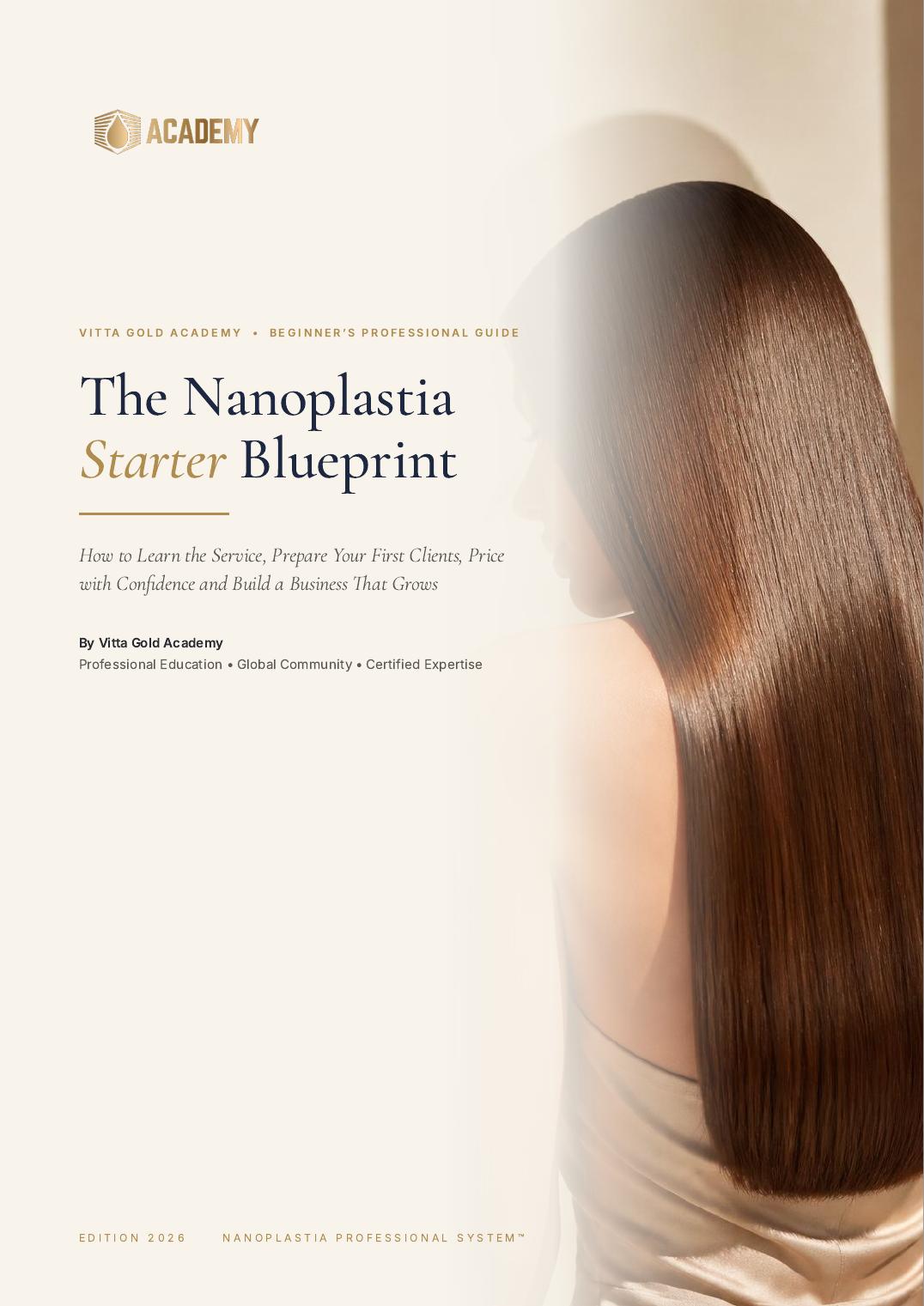
The Nanoplastia Starter Blueprint
The 20-page beginner guide: the six-move roadmap, the starter kit, the six-stage professional system, the pricing framework and a 21-day plan to launch the service in your salon.
Download the blueprintFrequently asked questions
Can Nanoplastia be done at home?
It is not advisable. The outcome depends on diagnosis, a strand test, correct processing time and controlled thermal sealing, plus proper ventilation. A home user cannot assess those variables or correct an unexpected reaction.
Is salon Nanoplastia worth the price?
The price buys control of the result and the safety margin around it — a chosen finish from 100% straight to anti-frizz, on hair whose condition was assessed first, with a professional able to intervene if the hair reacts unexpectedly.
What should a client expect to pay for salon Nanoplastia versus a DIY kit?
Salon Nanoplastia costs more upfront because it includes diagnosis, a tested professional active, controlled thermal sealing and a result the stylist stands behind. A DIY kit is cheaper but offers no diagnosis, no strand test and no recovery path if the result goes wrong.
Does a home kit last as long as a salon Nanoplastia service?
Usually not. Longevity depends on correct processing time and complete thermal sealing, which a domestic iron and an unsupervised application rarely achieve consistently, so results tend to fade faster and more unevenly.
What is the biggest risk of doing Nanoplastia at home?
Uneven application and incorrect processing time, often combined with poor ventilation and no way to diagnose the hair beforehand. These combine to produce patchy, short-lived results and avoidable exposure risk.
How should I respond when a client asks why they can't just buy the product themselves?
Explain that the product is only one part of the service — diagnosis, strand testing, processing time control and thermal sealing technique are what determine the result, and those come from training, not from the bottle.
Does the active ingredient matter as much as the technique?
Both matter, but technique is what a home user cannot replicate. The same professional active applied with correct diagnosis, timing and thermal sealing produces a reliable 3-to-6-month result; applied without those controls it can underperform regardless of the product's quality.
Is it safe to touch up Nanoplastia at home between salon visits?
The safe at-home step is following the sulfate-free aftercare routine, not applying another smoothing product. Root regrowth should be addressed at the next scheduled professional service, not with a DIY application layered onto already-treated hair.